SPRING
DRC National Anemia Profile
The document is the DRC National Anemia Profile prepared by USAID and SPRING.
2017
Sign in to readA free account is required to download.
Abstract
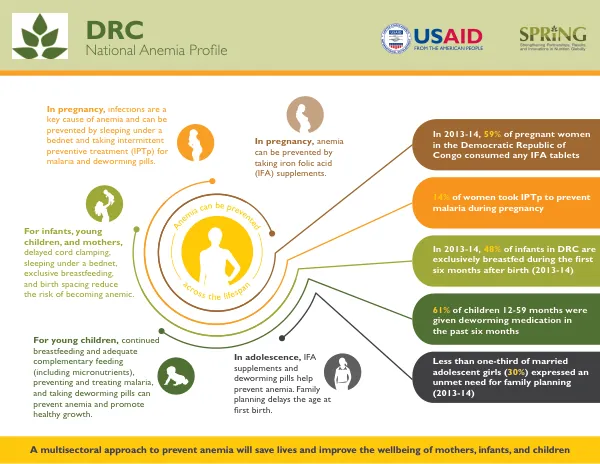
It provides an overview of anemia in the Democratic Republic of Congo (DRC), including its prevalence, causes, and prevention strategies. The profile highlights the importance of addressing anemia, as it has significant negative effects on the health and economic wellbeing of individuals and communities. Anemia can lead to cognitive and developmental delays in children, and increases the risk of pre-term delivery and low birth weight in pregnant women. The document presents data on the prevalence of anemia among different age groups, including children and women of reproductive age. According to the data, the prevalence of anemia among children 6-59 months was 59.8% in 2014-2015, while among women 15-49 years), it was 38.4% during the same period. The profile emphasizes the importance of a multisectoral approach to preventing anemia, including strategies such as iron supplementation, deworming, breastfeeding, and complementary feeding. It also highlights the importance of policies and strategies to support reductions in anemia, such as iron and folic acid fortification legislation and delayed cord clamping. The document also presents data on the status of policies and strategies to support reductions in anemia in the DRC. It highlights the progress made in increasing iron uptake and stores, reducing iron losses and infection, and improving infant and young child feeding practices. Finally, the profile emphasizes the importance of multiple sectors playing a role in anemia prevention and treatment, including agriculture, water and sanitation, health, education, and data sources.