MINISTRY FOR COMMERCE, TOURISM, AND INDUSTRY
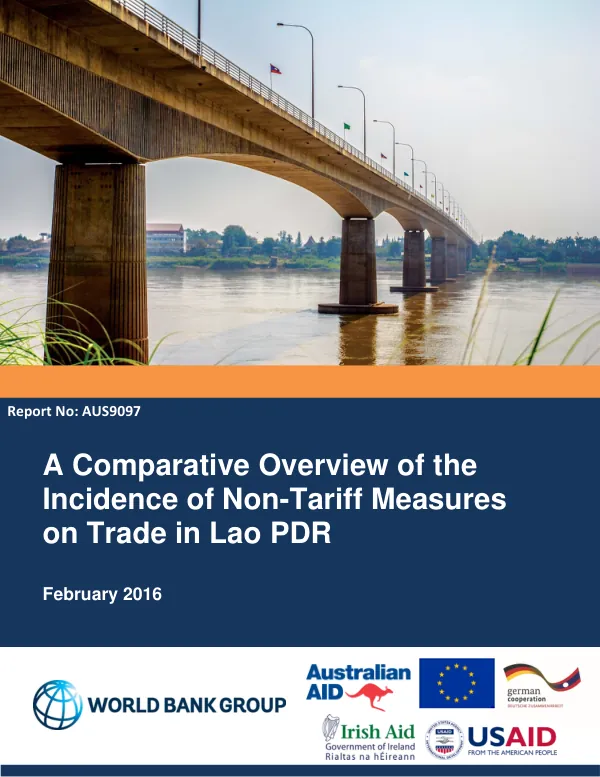
A Comparative Overview of the Incidence of Non-Tariff Measures on Trade in Lao PDR
Lao PDR's growth prospects are directly linked to its ability to benefit from integration into the global economy.
2016 · 38 pages
Sign in to readA free account is required to download.
Abstract
The country has given priority to the integration of its economy into both the Southeast Asia region and the multilateral rules-based trading system. As a result, Lao PDR signed the ASEAN Trade in Goods Agreement (ATIGA) in 2010 and became a formal member of the World Trade Organization (WTO) in 2013. Both agreements required profound modifications on tariffs, non-tariff measures (NTMs), customs reforms, and trade facilitation. The effectiveness of the regulatory framework to trade is important for firms and consumers to be able to access imported products in a cost-efficient way, as well as for the Government to exercise the adequate control to ensure that products comply with domestic regulations. An efficient system should also minimize informal trade. This report focuses specifically on the incidence of NTMs in import flows, providing a comparative overview with respect to other countries in the region and with the situation before WTO accession. The accession to the WTO brought Lao PDR's NTMs close to the regional practice, but the current framework still includes a cumbersome and costly import license scheme that raises the time and costs to bring products into the market. Three main problems associated with the procedures to obtain licenses are identified. First, the system to grant licenses is centralized in the capital for the majority of regulated products, requiring rural traders to spend time and resources to obtain the certificates in Vientiane. Second, a lack of coordination between central authorities and border agencies leaves room for provincial authorities to exercise their own discretion and delay the process. Third, internal procedures and timelines to grant licenses at the central government are not well communicated to the trading community, leaving room for unnecessary delays and encouraging informal payments to be made to expedite the process. Para-tariff fees associated with import licenses applied to approximately US$ 211.5 million worth of imports in 2014 (7% of the total) and are estimated to be equivalent to ad-valorem tariff of 5.4%, which is well above regional and world averages. Besides increasing the costs and the time required to import products, the current license structure may have negative implications for households (specially the poor) and can also encourage importers to resort to informal channels to bring their product into the market, putting the health and safety of consumers at risk. Conducting a regulatory impact assessment of import licenses and of their associated fees should be a priority. An immediate step should be reviewing the manner and frequency that fees are collected to reduce the administrative burden associated with applying for and obtaining import licenses for the trading community. This effort must be followed up by a more comprehensive review of licenses in those products that, while important for the daily life of Lao people, do not generate important fiscal revenue to line agencies. Products under this category include bicycles, food preparation items, stoves, baby strollers, and –to a lesser extent, motorcycles. The institutional mandate to review, consult, and propose regulatory modifications to streamline NTMs is already in place at the Ministry of Industry and Commerce (MOIC). The Department of Imports and Exports (DIMEX) serves as the technical secretariat of the NTM Review Sub-Working Group (NRSWG), which is the interagency body in charge of discussing and streamlining proposals made by DIMEX at the highest level of the Government. To ensure that the technical analysis translate into policy actions, it is paramount that the NRSWG is legally enacted by the MOIC. An efficient and transparent regulatory framework governing international trade is a necessary condition for countries to realize the benefits of international trade. The regulatory framework should be designed to facilitate trade, while ensuring that products comply with domestic regulations. In Lao PDR, the current regulatory framework governing international trade is not efficient and transparent, and it hampers the ability of the country to reap the gains of a deeper integration with the global economy. The regulatory framework governing international trade in Lao PDR is complex and involves multiple agencies and stakeholders. The Ministry of Industry and Commerce (MOIC) is responsible for regulating international trade, while the Department of Imports and Exports (DIMEX) is responsible for implementing the regulations. The NTM Review Sub-Working Group (NRSWG) is the interagency body in charge of discussing and streamlining proposals made by DIMEX at the highest level of the Government. The regulatory framework governing international trade in Lao PDR is not efficient and transparent, and it hampers the ability of the country to reap the gains of a deeper integration with the global economy. The current regulatory framework is complex and involves multiple agencies and stakeholders, which creates opportunities for corruption and delays in the trade process. The regulatory framework should be simplified and made more transparent to facilitate trade and ensure that products comply with domestic regulations. The regulatory framework governing international trade in Lao PDR should be designed to facilitate trade, while ensuring that products comply with domestic regulations. The regulatory framework should be simplified and made more transparent to facilitate trade and ensure