MANAGEMENT SCIENCES FOR HEALTH
A Practical Guide for Health Facilities Located in Tropical Areas
Health facilities located in tropical areas face unique challenges in maintaining a stable temperature within their pharmacies.
2014 · 4 pages
Sign in to readA free account is required to download.
Abstract
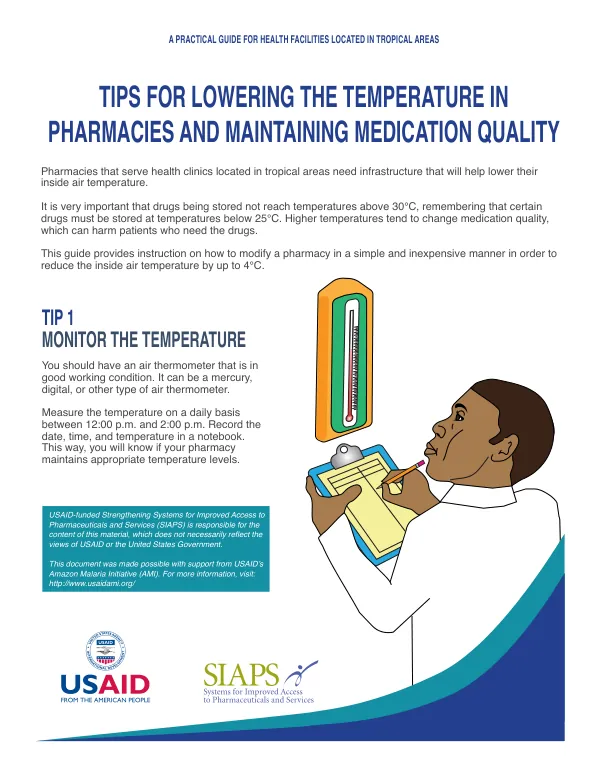
High temperatures can compromise the quality of medications, posing a risk to patients. To mitigate this issue, a practical guide has been developed to help lower the temperature in pharmacies and maintain medication quality. The guide emphasizes the importance of monitoring the temperature, with a recommendation to use an air thermometer to measure the temperature daily between 12:00 p.m. and 2:00 p.m. This allows for the identification of any temperature fluctuations and ensures that the pharmacy maintains appropriate temperature levels. The ideal temperature for storing medications is below 30°C, with some medications requiring storage at temperatures below 25°C. Proper location of the pharmacy is also crucial in maintaining a stable temperature. The guide suggests locating the pharmacy in the coolest spot within the health facility, ideally near a multistory building or a tall tree that provides shade and prevents the roof from becoming too hot. The pharmacy should be constructed with concrete walls and roof, high windows, and a suspended ceiling to facilitate air circulation and reduce heat buildup. A suspended ceiling can be installed to dissipate warm air, which is a simple and inexpensive solution. The frame should be situated 10 cm from the roof, with both ends open to allow air circulation. The openings between the suspended ceiling and the roof should be covered with netting or a plastic mesh to prevent pests from entering. Protecting exterior walls from direct sunlight is another essential aspect of maintaining a stable temperature. This can be achieved by planting trees with tall trunks, wide branches, and dense foliage surrounding the pharmacy. Alternatively, extending the roof to provide shade for the outside walls or using latex paint or synthetic enamel to paint the outer walls white or a light color can also be effective. Appropriate ventilation and lighting are also critical in maintaining a stable temperature. If the pharmacy does not have air-conditioning, it should have windows to allow for air circulation and provide natural light. Windows should be installed on opposite walls, from north to south, to facilitate easy air flow. If construction only allows for windows on one wall, they should be installed opposite the door. Modifying the door to provide ventilation while ensuring proper security is also recommended. Half doors, also known as "Dutch doors," can be used to provide ventilation while keeping the lower door closed and the upper door open during patient care hours. This allows for increased air circulation with fewer safety concerns. Taking advantage of natural light is also essential in reducing the need for artificial lighting, which produces extra heat and increases costs. The guide suggests painting the inside of the pharmacy white or a light color to increase the amount of light and reduce energy consumption. Finally, keeping the pharmacy organized is crucial in maintaining a stable temperature. Shelves and pharmacy equipment should be organized in a way that facilitates air flow and allows workers to move about easily. Shelves should be placed at a 90-degree angle to the window to prevent direct sunlight from shining on the medicines, and windows should not be blocked by shelves or other equipment. By following these practical tips, health facilities located in tropical areas can maintain a stable temperature within their pharmacies, ensuring the quality of medications and protecting patients from potential harm.