USAID DEC
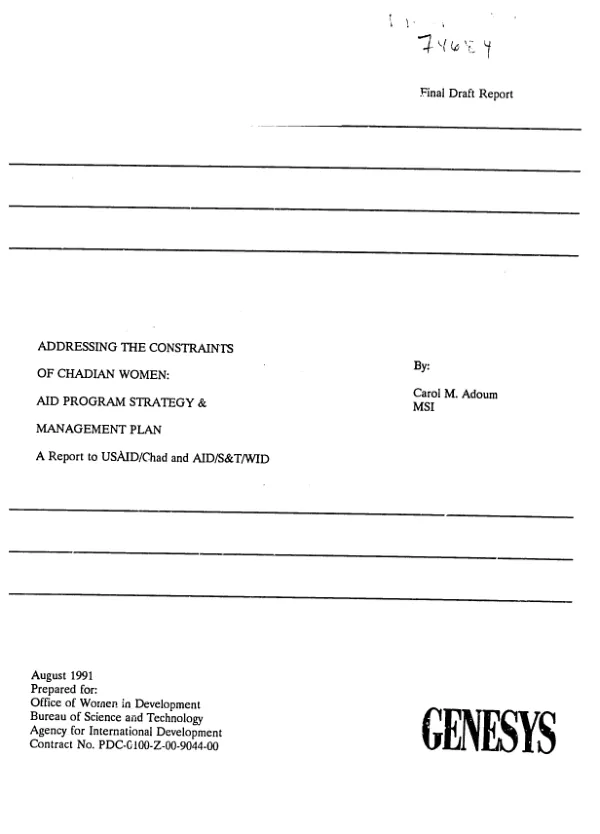
Addressing the constraints of Chadian women : AID program strategy and management plan
Sign inMANAGEMENT SYSTEMS INTERNATIONAL, INC. (MSI)
Addressing the constraints of Chadian women : AID program strategy and management plan
In Chad, the last 10 years have seen a marked increase in the number of women performing income-generating activities and supporting their families as men have been killed in war, abandoned their families during the drought, or been unable to find work.
Adoum, Carol M. · 1991
Sign in to readA free account is required to download.
Abstract
Large numbers of women-headed households have appeared, especially in the large cities, but also in the rural Sahelian areas. It is not unusual for a Chadian woman to support four individuals in addition to her own children. This report explores the role of women in Chadian society; areas covered include women"s social, familial, and religious roles; women"s legal status; women"s participation in Chad"s political, economic, and business life; and women and health care. Major findings include the following. (1) Though women are key actors in marketing and value-added activities, especially in agriculture, in some ethnic groups they must return the income generated to their husbands. (2) Legally, women are accorded the same rights as men, but traditions and Koranic law usually are applied, and many of these are unfavorable to women. (3) Women"s formal education lags far behind that of men, as does their access to credit, technology, and technical training. (4) Women are often dependent on their husbands for health decisions, and efforts to train women in preventive health care have been sporadic and often inappropriate. Despite this glum picture, some positive signs are appearing. Women now hold nontraditional roles in government, lead large enterprises, and are active in most major political and social programs. A women in development strategy for USAID/Chad is outlined in conclusion.