USAID DEC
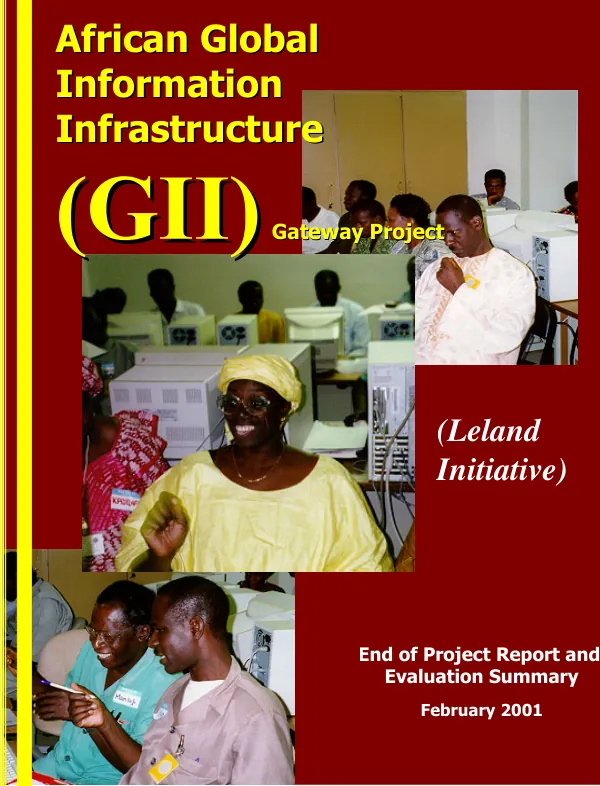
African global information infrastructure (GII) gateway project : (Leland initiative) -- end of project report and evaluation summary
Sign inACADEMY FOR EDUCATIONAL DEVELOPMENT, INC. (AED)
African global information infrastructure (GII) gateway project : (Leland initiative) -- end of project report and evaluation summary
Final report of the Academy for Educational Development (AED) on the African Global Information Infrastructure (GII) Gateway project (Leland initiative -- 2/95-2/01, designed to extend full Internet connectivity to a minimum of 20 countries in sub-Saharan Africa and to encourage African use of the Internet for development purposes.
2001
Sign in to readA free account is required to download.
Abstract
In pursuit of the project purpose, AED: conducted end-user assessments to raise awareness and determine readiness to adopt the Internet, using the resulting data to develop indicators of readiness for use of the Internet; identified the most frequent barriers to access and effective use of the Internet; and formed the core for the design and development of a variety of training options to grow a user base educated in the Internet. AED conducted surveys of project training in Ethiopia, Benin, Madagascar, and Mali. Some 92% of respondents indicated that they had used the Internet since the training, and 90% had Internet connections in their organizations, about half of whom had only one computer connected. Because of these high levels of connectivity, most of those working for host country organizations use it in their offices (82%), though some still gain access through cybercenters (16%). More than half (51%) of the respondents have trained others to use the Internet -- colleagues, associates, friends, and family. All told, Leland training graduates have trained at least 1,700 others, a process that it is hoped will expand over time. Most respondents (84%) have shared information from the Internet with others. Respondents are also active in promoting their organizations and their own information. For example, about 20% of respondents have used the Internet for web page development, and 45% indicated that the Internet has a role in helping their organizations achieve their goals by helping to create publications and promotional materials. By November 2000, all 54 African nations had been connected to the Internet. The average cost for using the Internet (usage fees and telephone time) has dropped to US$50 per month, and the number of users has climbed to 150,000 (in all of sub-Saharan Africa, except South Africa). Policies have changed to facilitate access as well; 16 countries have adopted policies that charge long-distance Internet users at local costs. Lessons learned are as follows: (1) People are using Internet for development and are sharing information and skills. Many barriers at the national and institutional levels have been overcome, and those that still exist are sometimes overcome through other means, such as cybercafes. (2) Users can gain a great deal from the Internet, even if access is not consistent and reliable. The training"s emphasis on understanding what the Internet can offer and how it can best be used went a long way in inspiring participants to use the Internet in spite of technical problems. (3) The Internet can change the way institutions operate, especially if it affects the bottom line. (4) Training needs to be followed-up by other assistance if it is to change the way the organization operates. (5) Even if the barriers seem overwhelming, people do come together to advocate and act for this type of change, once they understand its potential. Africans know that this can help them especially, given their long-time lack of access to information and technology. They are also anxious to communicate their own information to others. (6) Champions are an essential element of the technology advocacy and adoption process. (7) Training executives and managers to understand the implications of Internet use for their organizations is essential to the adoption process. (8) The training developed a substantial Internet user base in sub-Saharan Africa that understands the importance of the Internet in African development. In sum, the Leland Initiative and AED"s role in developing a significant user base have contributed greatly to the ability of Africans to understand, access, and use the Internet, opening up untold opportunities for obtaining and sharing information worldwide. Such information exchange has the potential to bring data and knowledge to a host of subject areas as never before, significantly enhancing development policy and practice.
Related documents
Documents in this collection
 1996
1996USAID DEC
Leland initiative : Africa global information infrastructure gateway project (project no. 698-0565) -- best practices for policy accommodation, technology transfer, and end - user applications of the Internet in the developing world
Open record 1999
1999USAID DEC