USAID. BUR. FOR POLICY AND PROGRAM COORDINATION. CENTER FOR DEVELOPMENT INFORMATION AND EVALUATION (CDIE)
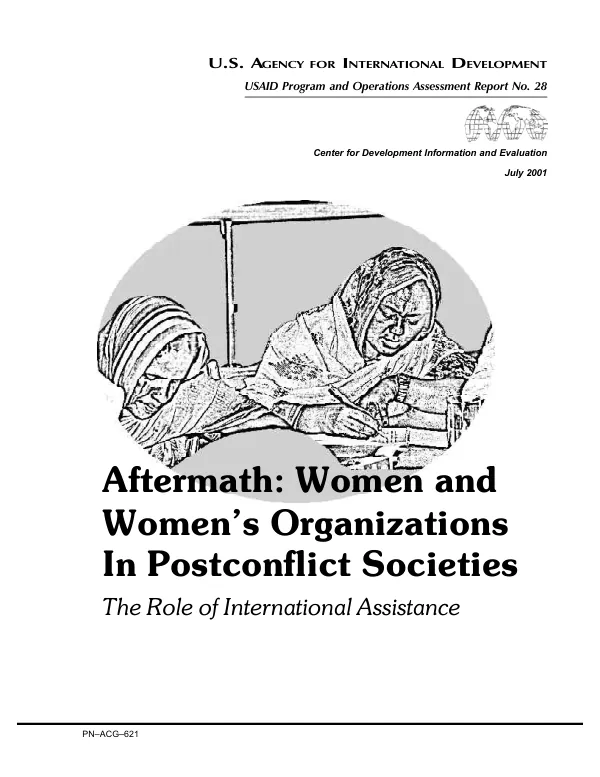
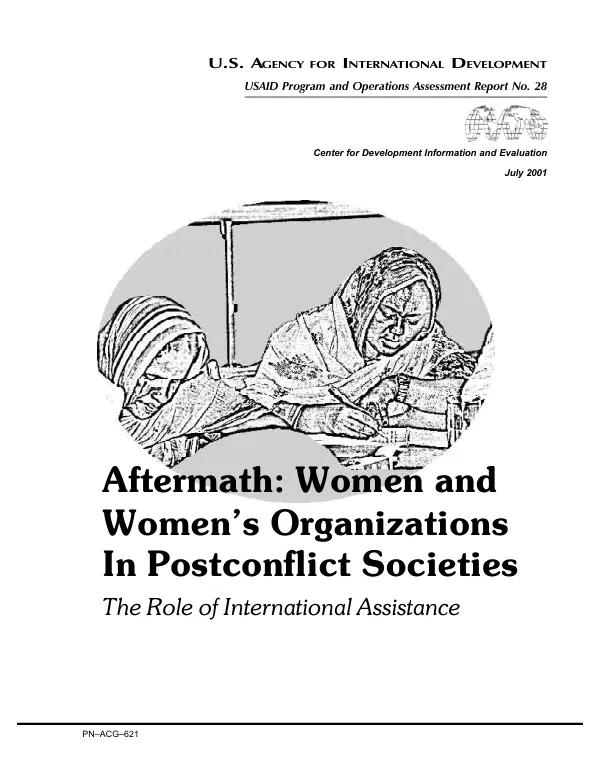
Aftermath : women and women"s organizations in postconflict societies
Since the end of the Cold War, intrastate conflicts have increased worldwide.
Kumar, Krishna · 2001
Sign in to readA free account is required to download.
Abstract
This report, a synthesis of a longer study by the same title (PN-ACG-621), examines the effects of these conflicts on women in six case-study countries: Bosnia, Cambodia, El Salvador, Georgia, Guatemala, and Rwanda. It looks as well at the rise of indigenous women"s organizations -- their role, their impact, and their future. The effects of war on women fall into three broad categories: (1) Social and psychological. Women were often traumatized by the conflict. Fear of violence and sexual abuse (rape had actually been used as a tool of war) often kept women from moving about freely. Abject conditions in many post- conflict societies contributed to the growth of prostitution. (2) Economic. Rural women were denied ownership of land their dead husbands or parents had owned. Urban women carved out a living mostly by selling foods and household items. During periods of conflict, women could work in many occupations. As ex-combatants returned to civilian life, however, female workers often lost their jobs. (3) Political. In the absence of men, all six countries witnessed an expansion of women"s public roles during the conflict. The conflicts created a ripe environment for the emergence or growth of women"s organizations. For one thing, the wars undermined the traditional social order; women found it easier to take part in public affairs. Moreover, governmental reforms after the wars created political space to launch women"s organizations. Another factor was disillusionment. During or in the immediate aftermath of the wars, women"s expectations of increased political participation had risen. Those expectations were never fully realized. A final factor was the readiness of the international community to assist such organizations. In the case-study countries, women"s organizations have been active in virtually all sectors: social, educational, economic, political. They have established health clinics and carried out programs to generate income and employment for women. They have grappled with domestic violence, prostitution, and the plight of returning refugees and internally displaced women. And they have promoted democracy and human rights. Attending the emergence of women"s organizations is an array of obstacles. They are social and cultural, imposed from without, as well as organizational, imposed from within. Chief among the former is women"s low social status. Chief among the latter is the reluctance of women leaders to delegate authority and to train junior staff for future leadership. There is, moreover, a lack of communication and sharing among organizations. International bodies have provided financial support and have helped indigenous women acquire managerial, accounting, and technical skills. Outside assistance has also helped legitimize women"s organizations, e.g., by sheltering them from government interference. This assistance has been important to the development and sustenance of women"s organizations, and it will continue to be necessary far into the future. Recommendations for USAID are to: (1) continue to foster women"s organizations; (2) build on women"s economic and political gains; (3) pay greater attention to civilian security; (4) make concerted efforts with the rest of the international community to prevent sexual abuse of women; (5) promote microcredit, while not ignoring its limitations; (6) support property rights for women; (7) consider multi-year funding for women"s organizations; and (8) promote the sustainability of women"s organizations through TA. (Author abstract, modified)
Related documents