USAID. MISSION TO JORDAN
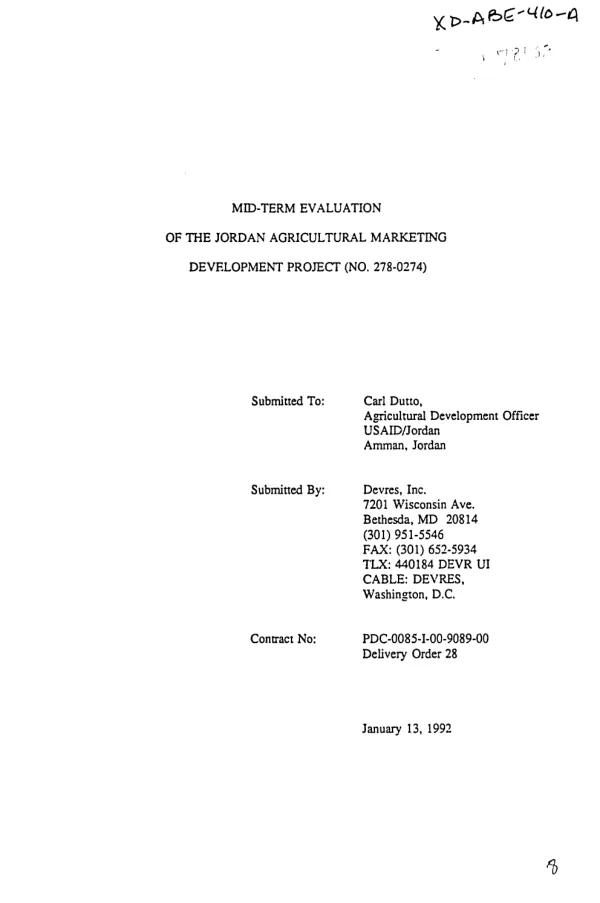
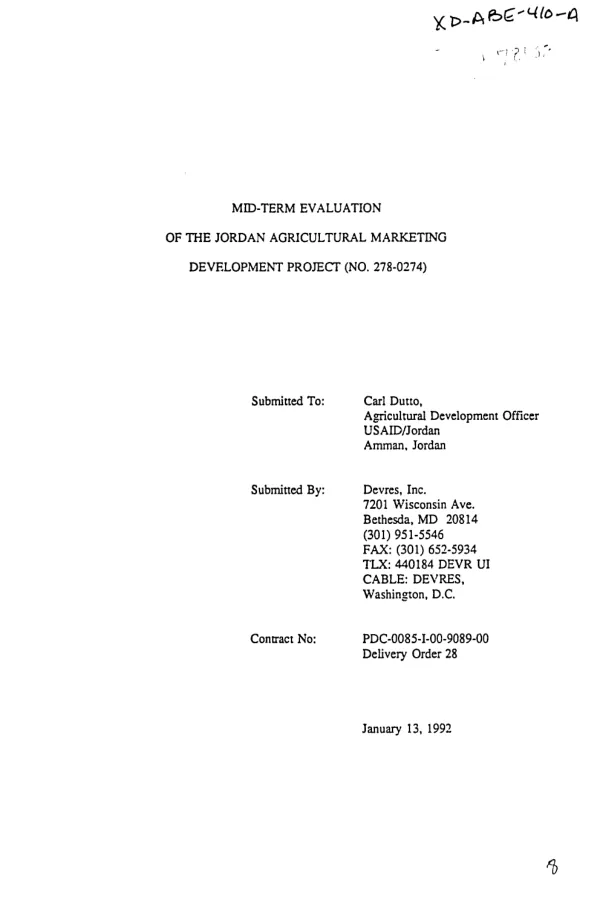
Agricultural marketing development project
Summarizes midterm evaluation (XD-ABE-410-A) of a project to improve Jordanian systems for marketing fruits and vegetables to both domestic and export markets.
1992
Sign in to readA free account is required to download.
Abstract
The evaluation covers the period 1988-9/91. The project is basically on track, but several objectives remain to be met. The project has not yet established the policy analysis capability or institutional framework needed by the Agricultural Marketing Organization (AMO) to improve market efficiency -- a major project thrust. AMO assistance to the private sector has only begun to show signs of progress, while there has been no progress in eliminating price controls or in privatizing the Agricultural Marketing and Processing Company (AMPCO). Even though the originally scheduled amount of (generally well received) TA has been exceeded, more TA, both long- and short-term, will be needed. Several activities have shown mixed or poor results. (1) The project has successfully included AMO and the private sector in preparing the Strategic Action Plan, but the plan has not been fully implemented due to weak follow-up. (2) A successful domestic market information system has been established for the Amman wholesale market, but the system fails to cover wholesale markets in Irbid and Zarqa. Export market information on the Gulf States is weak due to the political situation, and information on Europe is underdeveloped. (3) AMO has been unsuccessful in helping growers and exporters incorporate as legal entities and has not fully interacted with the Jordan Valley Farmers Association and other Government of Jordan (GOJ) agencies. (4) Although fruit and vegetable exports to Europe and the Middle East have already increased beyond targets, this has been due to the efforts not of the project, but of the private sector. Crop diversification is proceeding very slowly. In other areas, the project design should be amended to include the monitoring of pesticide use and residues, and GOJ financial support for the project has been far below the agreed to level. Two lessons learned noted by USAID (not the evaluators) are included. (1) Assistance to government entities should be contingent on demonstrable host government support. (2) Assisted host government entities should have clear, focused, and achievable mandates.