USAID. BUR. FOR PROGRAM AND POLICY COORDINATION. CENTER FOR DEVELOPMENT INFORMATION AND EVALUATION (CDIE)
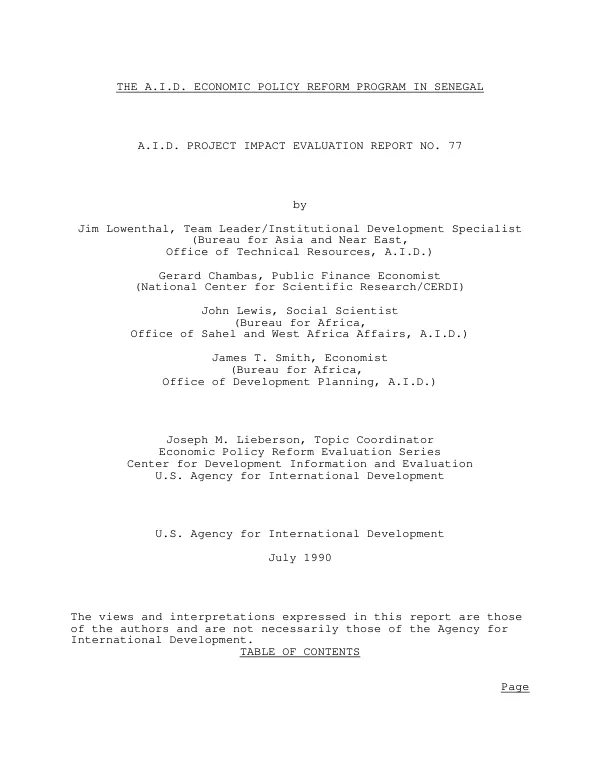
AID economic policy reform program in Senegal
In 1986, A.I.D.
Lowenthal, Jim|Chambas, Gerard · 1990
Sign in to readA free account is required to download.
Abstract
initiated a program to reform Senegal's system of tax and revenue administration. The program was designed to complement industrial sector reforms managed by the World Bank, since industrial stagnation was largely attributed to years of heavy tariff protection and high taxes on both the agricultural sector and consumers. A.I.D. contributed $14 million in cash transfer funds and $1 million in technical assistance to promote the reforms, almost all of which were implemented by 1988. The Government of Senegal substantially reduced quantitative restrictions on imports; implemented a new commercial investment code; reduced across-the-board tariff protection; and designed a dramatically revised tax revenue system that included major provisions for taxing urban real estate. Contrary to expectations, the immediate impacts of the reforms were negative -- economic activity in the formal industrial sector slowed and government revenues seriously declined. Private firms, accustomed to decades of protection, had made no provisions for competing in an international market. Their competitiveness was also weakened by an unfavorable national political and economic climate, increased administrative fraud following the reduction in customs rates, and the failure of donors and the Government of Senegal to implement additional, complementary reforms. Despite these constraints, the reforms are now showing signs of the desired effects, particularly with regard to promoting private sector competitiveness and reversing the decline in government revenues. It is expected that the medium-term impacts of the reforms will meet the program goals.