USAID DEC
AID grant no. AOT-1002-G-00-3157-00 to the American Friends of Action Internationale Contra la Faim (AF/AICF) in support of its application, entitled `Emergency and rehabilitation program : medical, nutrition, water and sanitation" [for displaced people in Eastern Sierra Leone], dated July 20, 1993
Sign inUSAID. OFC. OF U.S. FOREIGN DISASTER ASSISTANCE (OFDA)
AID grant no. AOT-1002-G-00-3157-00 to the American Friends of Action Internationale Contra la Faim (AF/AICF) in support of its application, entitled `Emergency and rehabilitation program : medical, nutrition, water and sanitation" [for displaced people in Eastern Sierra Leone], dated July 20, 1993
Grant to American Friends of Action International Contra la Faim (AF/AICF) to provide emergency medical, nutritional, and water/sanitation assistance to people in eastern Sierra Leone displaced by the civil war in Liberia.
1993
Sign in to readA free account is required to download.
![AID grant no. AOT-1002-G-00-3157-00 to the American Friends of Action Internationale Contra la Faim (AF/AICF) in support of its application, entitled `Emergency and rehabilitation program : medical, nutrition, water and sanitation" [for displaced people in Eastern Sierra Leone], dated July 20, 1993](https://covers.devme.ai/gen/46635.webp)
Abstract
Grant funds will be used to meet the acute needs of 122,000 people in Kenema and Kailahn districts and initiate an emergency program in eastern Pujehun district. Specifically, AF/AICF will: (1) assess and meet the nutritional and medical needs of the most vulnerable among the target population; (2) operate six supplementary feeding centers and two therapeutic feeding centers for children under 5 and lactating and pregnant women in Segwema and Zimmi; (3) supply clinics with drugs and medical equipment; (4) support an Expanded Program of Immunization in rehabilitated areas; (5) rehabilitate water and sanitation facilities and construct new ones where necessary; (6) provide basic resettlement items and seeds and tools; (7) rehabilitate 12-15 basic health units (maternity units and dispensaries) and the regional clinic in Zimmi; (8) improve sanitation facilities (water supply points and latrines) or build new ones in camps and villages; (9) provide 4-6 wells -- possibly in the Tunkia area, where 8 villages without a water supply have been identified; (10) provide 2 wells in displacement camps where most needed; (11) build 250 double latrines in villages and camps; and (12) provide camps and villages with essential hygiene and health education services and train local staff in water and sanitation.
Related documents
Documents in this collection
 1990
1990USAID DEC
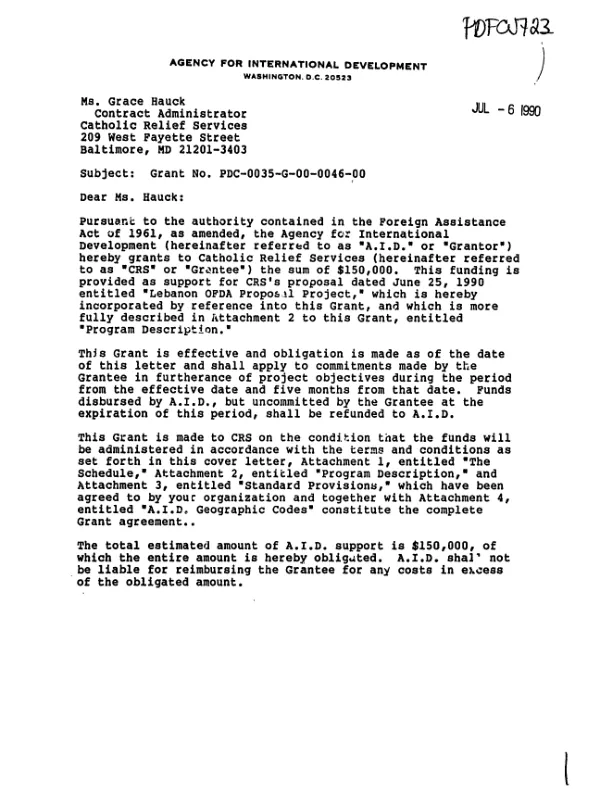
AID grant no. PDC-0035-G-00-0046-00 to the Catholic Relief Services for emergency relief to hospitals in Lebanon
Open record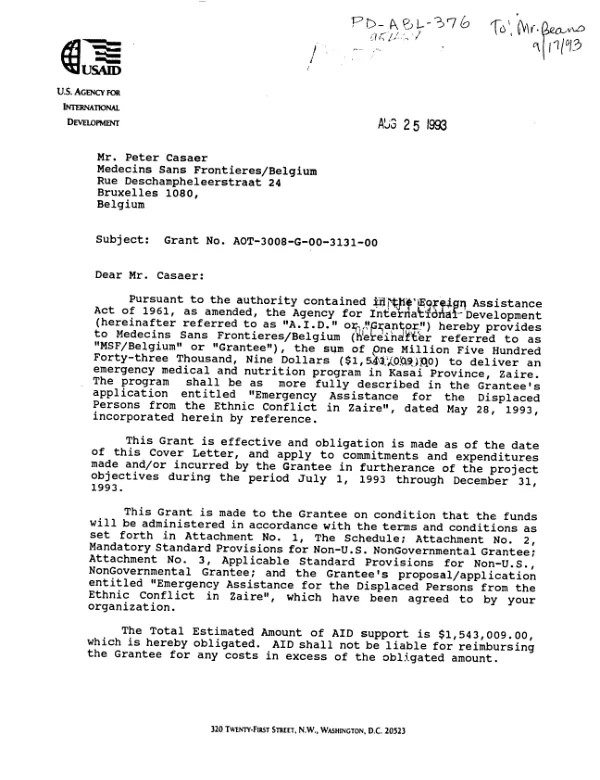 1993
1993USAID DEC