USAID DEC
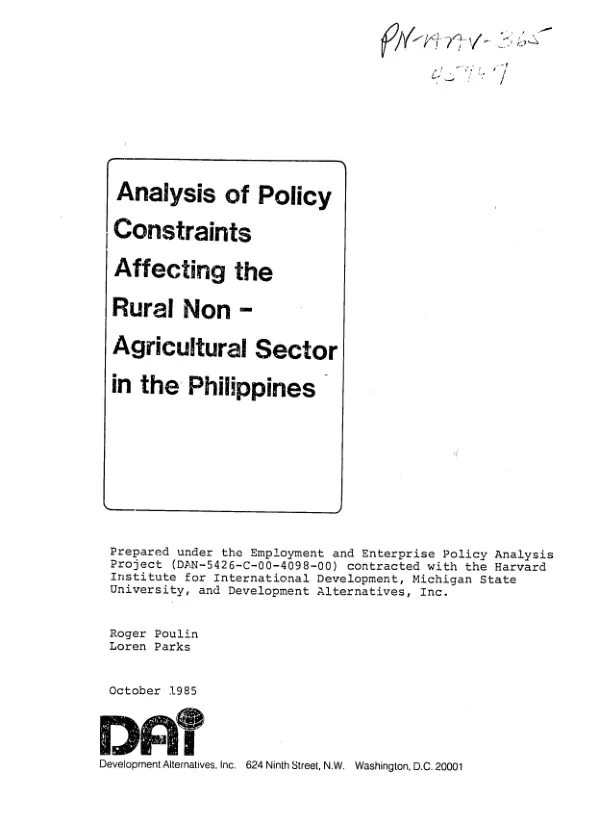
Analysis of policy constraints affecting the rural non-agricultural sector in the Philippines
Sign inDEVELOPMENT ALTERNATIVES, INC. (DAI)
Analysis of policy constraints affecting the rural non-agricultural sector in the Philippines
The rural non-agricultural (RNA) sector in the Philippines is underdeveloped, mainly because of import substitution policies - especially the overvalued exchange rate and import tariffs and controls - which steered the economy away from sectors where it enjoyed the greatest comparative advantage.
Poulin, Roger; Parks, Loren · 1985
Sign in to readA free account is required to download.
Abstract
In the long run, the best way to achieve sustained growth in the RNA sector is to follow the sound trade and monetary policies being promoted by the ongoing macro-economic policy dialogue. Since most of the employment in the RNA sector is in small businesses which provide consumer goods and services to the agricultural sector, a very strong link exists between growth in the two sectors. In the medium term, policies to increase agricultural growth will do more to increase RNA growth than all policies aimed directly at the latter. Nonetheless, certain measures can and should be taken to ensure that the RNA sector participates fully in the country"s overall growth. A 15-point RNA development strategy in terms of rural infrastructure, investment incentives, credit, and local government institutions is detailed. (Author abstract, modified)
Connected topics
Related documents