USAID DEC
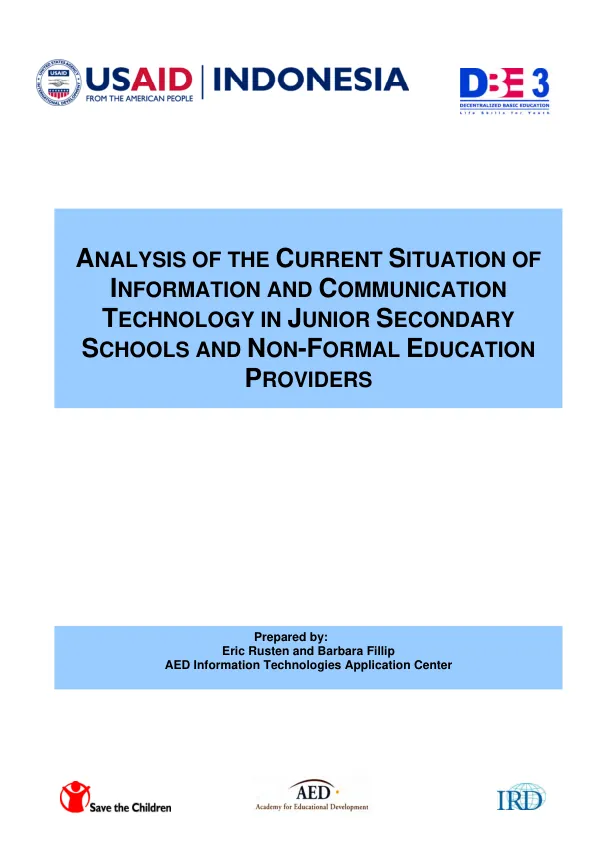
Analysis of the current situation of information and communication technology in junior secondary schools and non-formal education providers
Sign inUSAID DEC
Analysis of the current situation of information and communication technology in junior secondary schools and non-formal education providers
This report details an assessment by the DBE3of the uses of Information and Communication Technologies (ICTs) in both the formal schools (Junior Secondary Schools (JSSs) and non-formal education providers (NFEPs) comprising the junior secondary education system of Indonesia.
Rusten, Eric; Fillip, Barbara · 2007
Sign in to readA free account is required to download.
Abstract
The assessment was conducted using a mix of field visits, interviews, and a survey focused on a subset of DBE3 target institutions-namely, those JSSs and NFEPs that had been selected as part of cohort 1 of the DBE3 project. The primary purpose of the assessment is to identify avenues for supporting the DBE3 team in its efforts to achieve the project"s aim of enhancing life skills of youth in the secondary education system but also to contribute to USAID"s overall DBE program and the broader education improvement efforts being carried out by national and local Indonesian government agencies, non?governmental organizations (NGOs), schools, and communities by providing information that can help inform plans to use ICTs to improve education in areas such as school management, physical infrastructure, teaching, and learning. It is not possible to ignore the importance of ICTs in schools today.
Connected topics