CONSORTIUM FOR INTERNATIONAL DEVELOPMENT (CID)
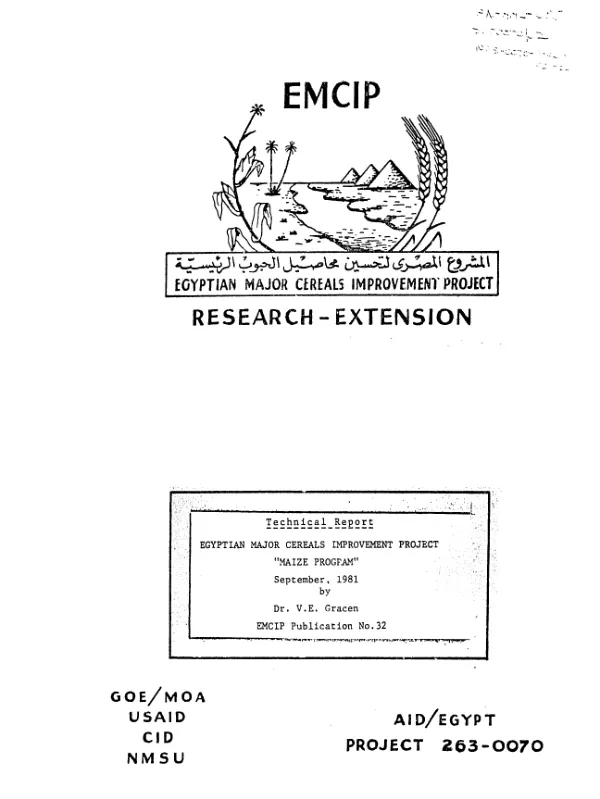
Analytical economic study of maize production in Egypt; research report
Total maize consumption in Egypt has more than doubled in the past 20 years and may double again by the year 2000, far exceeding feasible production and import levels.
Basheer, Abdel M. · 1981
Sign in to readA free account is required to download.
Abstract
Constraints to increased maize yield include insufficient local production of high-yielding variety seed, delays in maize planting due to harvesting of wheat and clover, lack of mechanization and of hand labor, and unfavorable farming practices. This study presents an economic analysis of maize production in the Egyptian Major Cereals Improvement Project (EMCIP). This largely statistical analysis describes changes in: production of maize (1950-80) and other crops (1960-80); improved maize varieties; maize-producing areas and actual yields (1975-79); total maize consumption (1960-80); maize production costs; market and farm-gate prices; net farm income per feddan of summer and nili maize (1975-80); and maize import prices (1960-80). Using the principle of comparative advantage, the author recommends switching production from maize and wheat to other crops such as cotton and rice. Factors limiting the application of this principle are market demand and the need for crop rotation, soil conservation, irrigation and drainage, storage facilities, security reserves, and farm animal feed. Adjusting farm-gate prices is recommended to control production.
Connected topics