INTERNATIONAL POTATO CENTER (CIP)
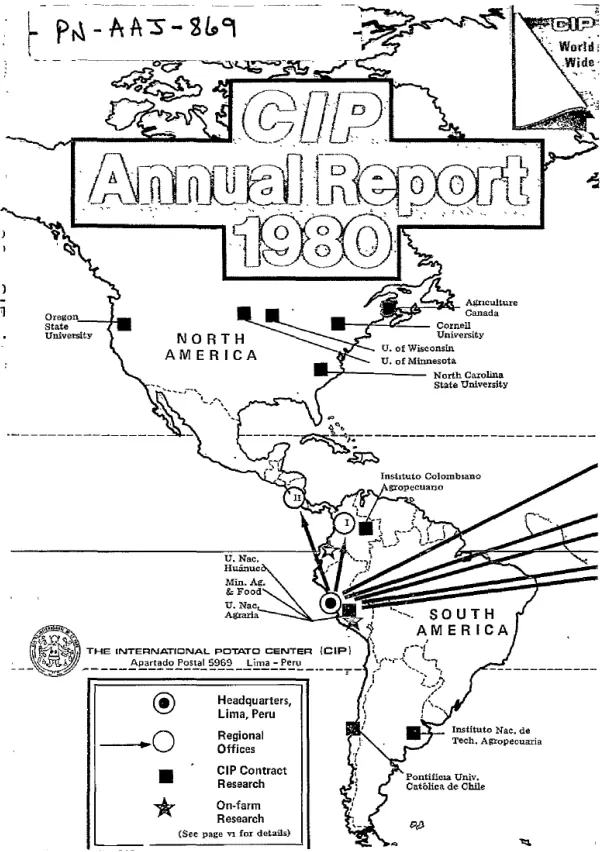
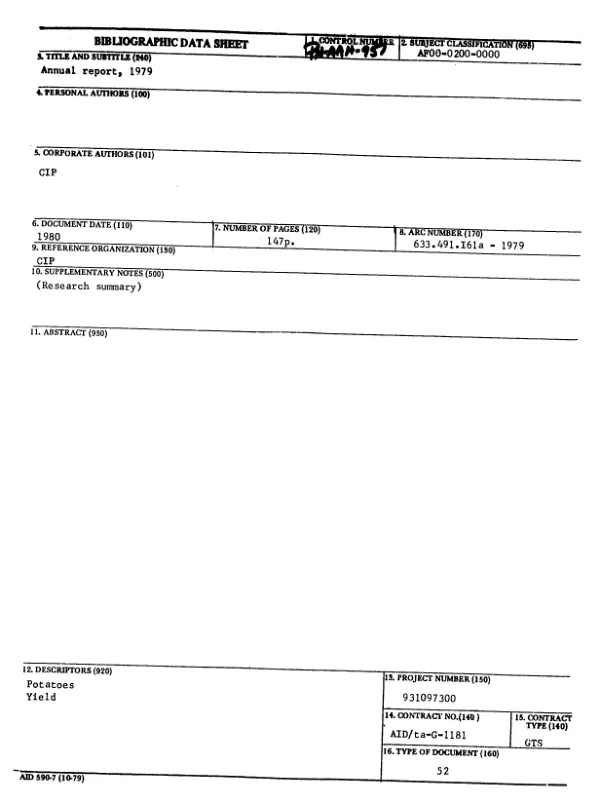
Annual Report, 1979
New methods and advances in potato and other agricultural technology have been developed far more rapidly than national programs can absorb and communicate them to the growers.
1970
Sign in to readA free account is required to download.
Abstract
This annual report documents the efforts and successes of the International Potato Center (CIP) in 1979 and urges a marked increase in funding and development of research and extension programs in the 1980"s. Problems and progress in each of the nine major thrusts of CIP research are examined in detail. The nine areas are: (1) collection and classification of tuber-bearing solanums; (2) maintenance and utilization of germ plasm; (3) control of fungal diseases; (4) control of bacterial diseases; (5) control of viral diseases; (6) control of nematode and insect pests; (7) physiological and agronomic management and stress physiology; (8) post-harvest technology; and (9) seed production research. A chapter on regional research and training examines activities, conducted in each of CIP"s seven regions, which concentrate on production by offering seminars and short courses on technological advances to local scientists. The next chapter focuses on CIP"s Training Department, which administers training at CIP"s Lima, Peru headquarters as well as in the regions. Training conducted in Lima concentrates on scientific specialties; in 1979, 28 program researchers and extensionists participated in courses on storage, agroeconomic research methodologies and procedures, and production of basic seed. The next chapter presents the results of research by CIP"s Social Science Department on four constraints to potato production in developing countries: agronomic management, tuber seed, pest control, and post-harvest technology. In 1979, five trials of 16 treatment combinations were conducted to alleviate potato production constraints. The potential for the potato as a foodcrop in the tropics and the processes/consequences of technological change were also researched. Finally, the success of CIP"s Communications Department in providing accurate, timely information to the public is discussed. A 49-item list of CIP publications (1978-79), a 30-item list of research and consultant contracts, and annexes on CIP personnel and finances are appended.
Related documents