BRAC INTERNATIONAL
Aponjon Media Campaign for Health Information Service
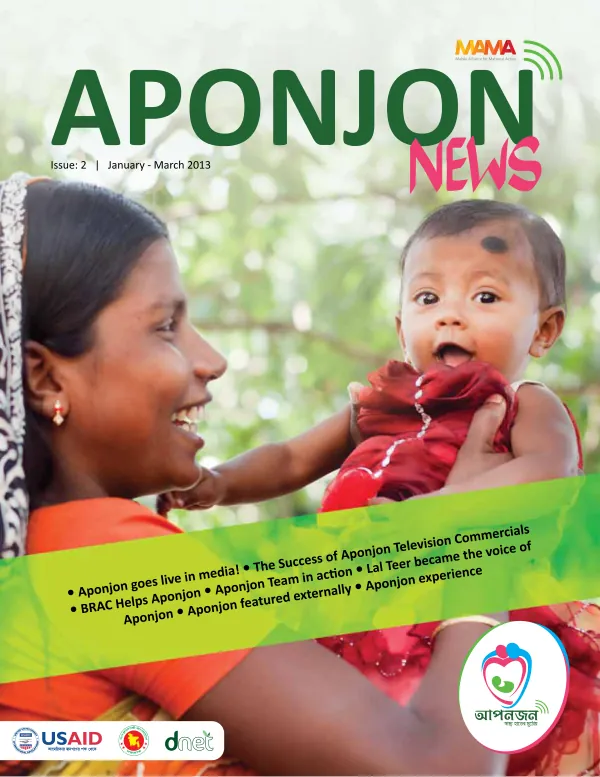
Aponjon, a mobile phone-based health information service for expecting and new mothers, was launched in Bangladesh in December 2012.
2013 · 12 pages
Sign in to readA free account is required to download.
Abstract
The service aimed to provide health information to mothers and their families during and after pregnancy. To promote the service, a nationwide media campaign was initiated in January 2013, which included television commercials, radio commercials, newspaper advertisements, and billboards. The media campaign was designed to create awareness about Aponjon, its benefits, and the short code 16227 for registration. The campaign targeted families with expecting mothers or newborn children, with the goal of increasing brand awareness and promoting the service. The television commercials, produced by Grey Advertising Agency, were the most popular element of the campaign, with two 50-second and 20-second versions aired on four television channels, including Bangladesh Television (BTV) and ATN Bangla. The television commercials created storylines based on two separate themes, one focusing on inexperienced parents of a newborn and the other based on problems encountered by a pregnant woman. The advertisements aimed to express the need for right health information for expecting mothers and newborn children, while also informing people that the Aponjon service has health messages not only for the expecting and new mothers but also for their guardians and family members. The campaign was successful in generating interest in the service, with thousands of people calling the Aponjon call center and registering themselves through the call center agents. The campaign saw a 44-fold increase in incoming calls and a 40-fold increase in registration through the call center agents. The number of new subscribers was found to be the highest ever since the inception of the service, with 5,919 expecting or new mothers and 5,270 family members enrolled into the service. The media campaign also included radio commercials, which were aired on one of the major FM stations in the country, Radio Today. The commercials were not only for pregnant women and new mothers but also included Radio Jockey (RJ) endorsement of the Aponjon service. Newspaper advertisements were published in the top four major dailies of the country, including Prothom Alo, Bangladesh Pratidin, The Daily Star, and Shamakal. The advertisements were visually stunning and included elements of human touch and comfort zone for the mothers. In addition to the media campaign, Aponjon also explored the possibilities of doing a live Aponjon talk show on television, where mothers can call the Aponjon short code and talk to doctors live on television. The service also started its social media campaign in the form of Facebook adverts and a Facebook page, which generated about 4.5 million impressions, 11,000 clicks on the Aponjon Facebook site, and 5,000 likes within less than a month. The success of the Aponjon media campaign can be attributed to the effective use of various media channels, including television, radio, newspaper, and social media. The campaign created awareness about the service, promoted the short code 16227, and increased brand awareness among the target audience. The campaign also highlighted the importance of right health information for expecting mothers and newborn children, which is essential for reducing maternal and child mortality rates in Bangladesh.