AMERICAN PUBLIC HEALTH ASSOCIATION
ASIA BUREAU MALARIA STRATEGY STUDY
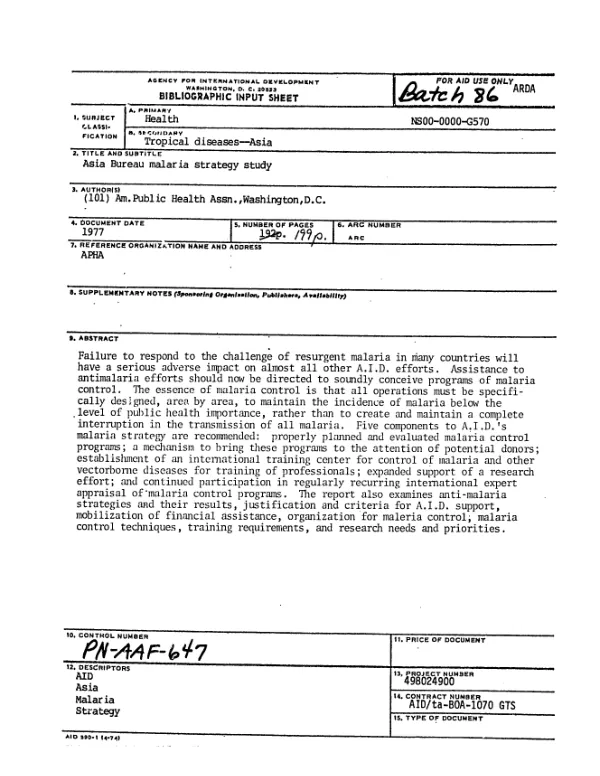
Failure to respond to the challenge of resurgent malaria in many countries will have a serious adverse impact on almost all other A.I.D.
1970
Sign in to readA free account is required to download.
Abstract
efforts. Assistance to antimalaria efforts should now be directed to soundly conceive programs of malaria control. The essence of malaria control is that all operations must be specifically designed, area by area, to maintain the incidence of malaria below the level of public health importance, rather than to create and maintain a complete interruption in the transmission of all malaria. Five components to A.I.D."s malaria strategy are recommended: properly planned and evaluated malaria control programs; a mechanism to bring these programs to the attention of potential donors; establishment of an international training center for control of malaria and other vectorborne diseases for training of professionals; expanded support of a research effort; and continued participation in regularly recurring international expert appraisal of malaria control programs. The report also examines anti-malaria strategies and their results, justification and criteria for A.I.D. support, mobilization of financial assistance, organization for malaria control; malaria control techniques, training requirements, and research needs and priorities.
Connected topics