USAID DEC
Assessing alternative resources, technologies, and organizational means for meeting rural energy needs
Sign inEAST-WEST CENTER (EWC). EAST-WEST RESOURCE SYSTEMS INSTITUTE
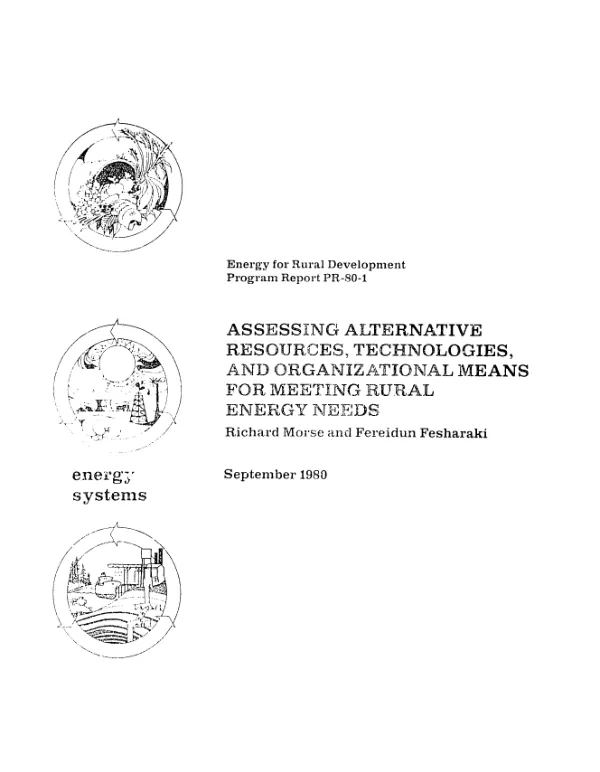
Assessing alternative resources, technologies, and organizational means for meeting rural energy needs
The Energy for Rural Development (ERD) Program aims at assessing the alternative resources, innovative technologies, and organizational and policy means needed to meet the energy needs of developing country rural people.
Morse, Richard; Fesharaki, Fereidun · 1980
Sign in to readA free account is required to download.
Abstract
The first in a series of reports summarizing current findings of the ERD Program is herein presented. A discussion of major rural energy issues - the impact of energy shortages on food supply, land and water constraints, variation in energy use and availability, user priorities and choice, and energy valuation, price, and exchange - supports an initial conclusion on the importance of the ERD"s needs-based energy policy research. An assessment of rural energy resource, supply, and investment strategies focuses on the middle petroleum distillates, especially kerosene and diesel oil, in terms of cost, the world petroleum trade, and current trends in ERD countries. Short-, medium-, and long-term strategies to meet current problems are suggested. The final section proposes policies and organizational guidelines to foster local development of renewable energy resources and technologies; the value of the FLERT approach, which assesses technologies in terms of social, environmental, and physical - in addition to price - criteria, is highlighted. Appendices include a discussion of cropping system taxonomies as a framework for rural energy analysis and a 49-item (1916-80) list of references.
Connected topics