WELLSTART INTERNATIONAL
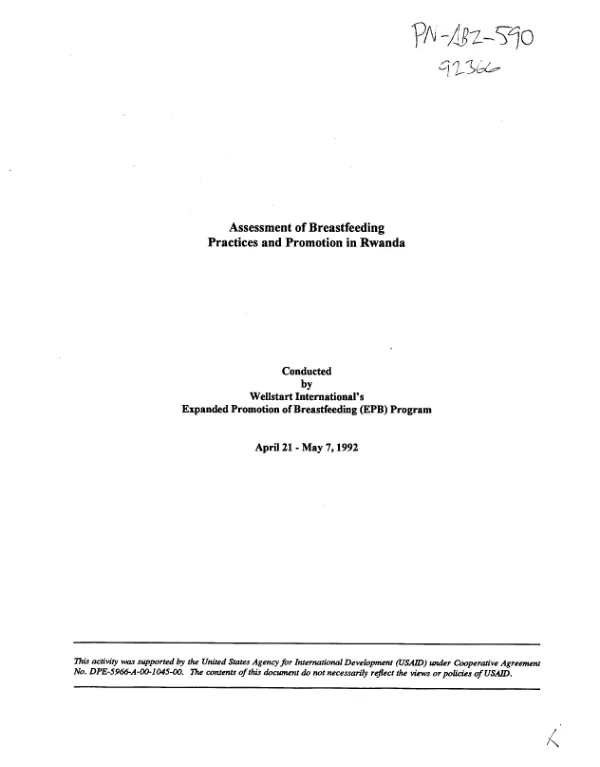
Assessment of breastfeeding practices and promotion in Rwanda
Breastfeeding is an important resource in Rwanda.
O"Gara, Chloe; Martin, Anna · 1992
Sign in to readA free account is required to download.
Abstract
Breastfeeding practices are generally good, except among salaried urban working mothers, and are characterized by universal initiation, on-demand feeding, and long duration. As a result of these practices, breastfeeding in Rwanda: (1) accounts for the relatively long birth intervals among non-contraceptive users, who represent over 85% of the population; (2) provides the best nutrition, in fact the only adequate nutrition, for the average Rwandan infant; (3) saves families, communities, and the nation valuable economic resources and foreign exchange; (4) and saves infants from repeated morbidity episodes in the first months of life and lowers rates and severity of morbidity in later months. Despite these positive aspects, there are problems associated with breastfeeding and infant feeding practices that should be addressed. Health personnel dismiss threats to optimal breastfeeding because they assume that all women can and will breastfeed. Furthermore, although breastfeeding management skills are good, knowledge about lactation is minimal; consequently, misinformation is readily transmitted. Factors that can interfere with optimal breastfeeding include delayed initiation, early supplementation, poor knowledge of lactation, inadequate breastfeeding counseling in family planning services, demands on women"s time and energy, and potentially confusing messages about Human Immunodeficiency Virus (HIV) transmission and breastfeeding. (Author abstract)