ACDI/VOCA
Audit of USAID/Tajikistan's Productive Agriculture Program
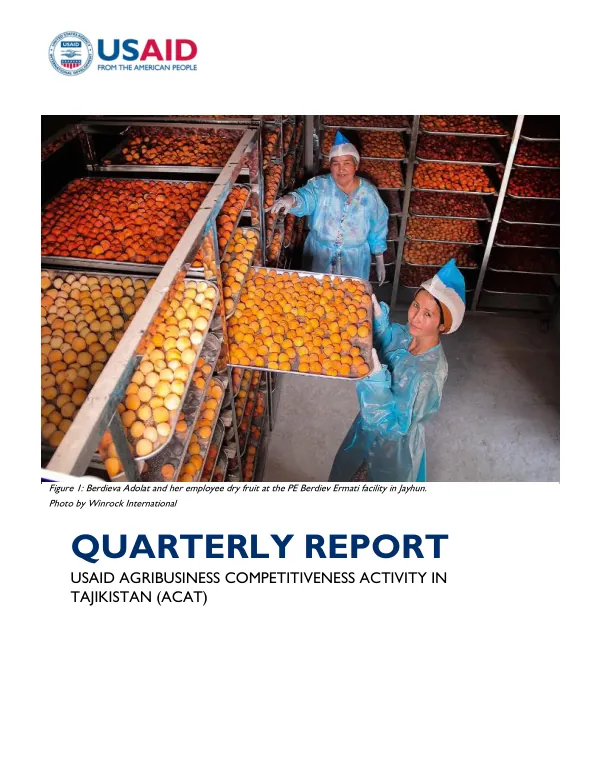
The Productive Agriculture Program in Tajikistan was implemented by USAID/Tajikistan to increase the productivity of traditional agricultural crops and expand agricultural profitability.
2011 · 24 pages
Sign in to readA free account is required to download.
Abstract
The program targeted onion, tomato, watermelon, lemon, apricot, and beef crops in western Khatlon, Sughd, and the district surrounding the capital, Dushanbe. A $9.8 million cost-plus-fixed-fee completion contract was awarded to ACDI/VOCA for a 5-year period from September 30, 2009, through September 29, 2014. As of June 30, 2011, the mission had obligated $3.2 million and disbursed $2.5 million under the program. Farmers in Tajikistan typically purchase agricultural inputs from local dealers that sell uncertified seed and use nitrogen-based fertilizer, which does not yield as much as other options. The program focuses on voucher distribution, allowing farmers to buy certified seed, complex fertilizer, pesticides, and other products at discounted rates. Training on improved cultivation techniques, fertilizer and pesticide application, and post-harvest handling techniques is also provided. Demonstration plots are used to illustrate the benefits of spending more money up front to achieve greater crop yields and profitability. The program aims to increase access to credit for farmers and agribusinesses and to increase agribusiness investment. Financial packages combining grants, matching funds, and loans at favorable interest rates are offered to program participants. The program also works to develop the market chain within the agriculture sector by strengthening relationships between input dealers and farmers and between farmers and processors and exporters. The audit found that the program has made some progress toward increasing the productivity and profitability of traditional crops. Participating farmers appreciated the training provided in association with the voucher activity, and market linkages between farmers and input dealers and between farmers and businesses have been strengthened. Apricot farmers using drying trays provided through the program's apricot voucher activity saw an improvement in the quality of their product, allowing them to sell their tray-dried apricots for almost double the price of their ground-dried product. However, the audit identified several problem areas that could affect the program's ability to achieve its high-level goals. The program lacked sufficient monitoring tools, communication, eligibility, and timing snags reduced voucher activity effectiveness, and bottlenecks inhibited the program's ability to increase access to credit and increase agribusiness investment. The report recommends that USAID/Central Asian Republics establish additional output indicators to report on the achievement of the voucher activity, adopt end-of-program evaluation procedures, and address bottlenecks in credit access and agribusiness investment.