USAID DEC
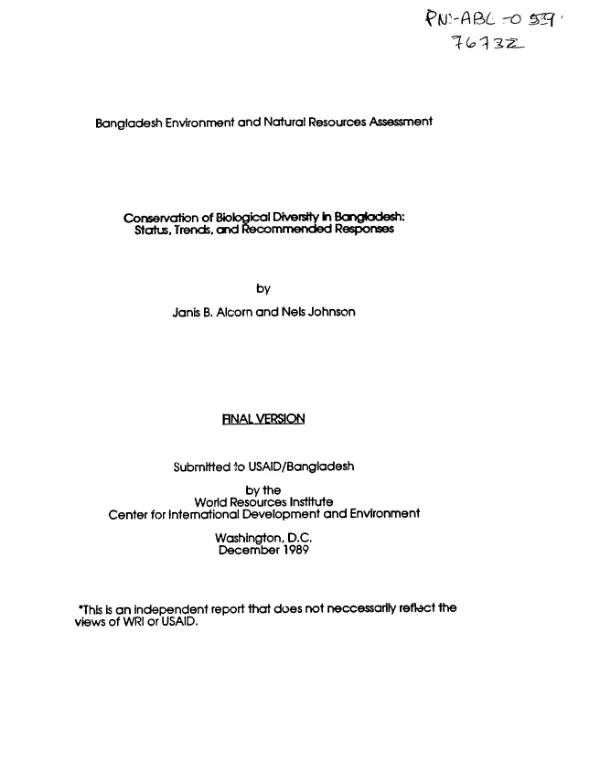
Bangladesh environment and natural resources assessment : conservation of biological diversity in Bangladesh -- status, trends, and recommended responses
Sign inCENTER FOR INTERNATIONAL DEVELOPMENT AND ENVIRONMENT (WORLD RESOURCES INSTITUTE (WRI))
Bangladesh environment and natural resources assessment : conservation of biological diversity in Bangladesh -- status, trends, and recommended responses
At least 94% of Bangladesh"s original natural habitat areas have been lost.
Alcorn, Janis; Johnson, Nels · 1989
Sign in to readA free account is required to download.
Abstract
What remains is found in the relatively sparsely populated Chittagong Hills, the Sundarbans mangrove forest zone, and a few small areas in Sylhet. This report presents an overview of conditions and trends affecting the conservation of the country"s biological diversity. Due to the overlap of geographic ranges for Indian, Himalayan, and Southeast Asian biotas, Bangladesh has a large number of species -- about 1,500 flowering plants, and 1,500 vertebrates -- although dozens of them are threatened (and possibly newly extinct). Highlights include the world"s only genetically viable tiger population, located in the Sundarbans, and unique varieties of wild and cultivated rices. Fish diversity remains high, but proposed flood control activities and mangrove conversion may significantly reduce the diversity of open-catch fisheries. The report concludes that biodiversity conservation in Bangladesh faces severe constraints. The subsistence needs of millions of people for fuelwood, fish, and cash income, coupled with a traditional attitude that biological resources are free for exploitation, creates a political climate inimical to sustainable development. Protected areas have been designated, but they do not cover all habitat types, and no management plans have been implemented. The report identifies the major institutions involved in conservation, and provides recommendations to USAID and the donor community. Includes 3-page bibliography.
Related documents