THE NATURE CONSERVANCY (TNC)
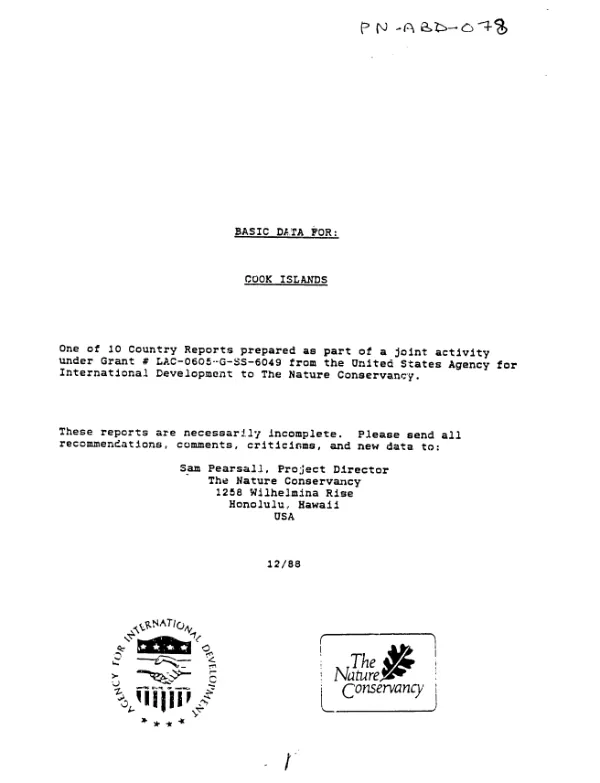
Basic data for : Cook Islands
Threats to biodiversity on the Cook Islands are identified in this report as they relate to population growth, economic development, land-use practices, alien (non-indigenous) species, accidental disasters, pollution, and commercial exploitation.
Pearsall, Sam · 1988
Sign in to readA free account is required to download.
Abstract
Although the archipelago"s population is declining slightly due to emigration to New Zealand, population pressure is still causing severe soil destruction, deforestation, and overgrazing, especially on atolls, the lowlands of high islands, and the capital island of Rarotonga. About 60% of the nation"s flora were introduced after European discovery, and standardization of garden and agricultural crops is probably resulting in the loss of several endemic cultivars. Isolated populations of rare species are subject to extirpation through tropical cyclones and frequent droughts and floods. Localized environmental degradation throughout the region has resulted from indiscriminant use of pesticides and disposal of pollutants and illegal poisoning of fish. The report also provides background information on the Cook Islands" basic geography (including a list of available maps and surveys), political system, biodiversity protection laws, land tenure system, managed area systems, and governmental and nongovernmental conservation agencies. Major taxa and ecosystems are also listed.
Connected topics
Related documents