INTERNATIONAL CENTER FOR TROPICAL AGRICULTURE (CIAT)
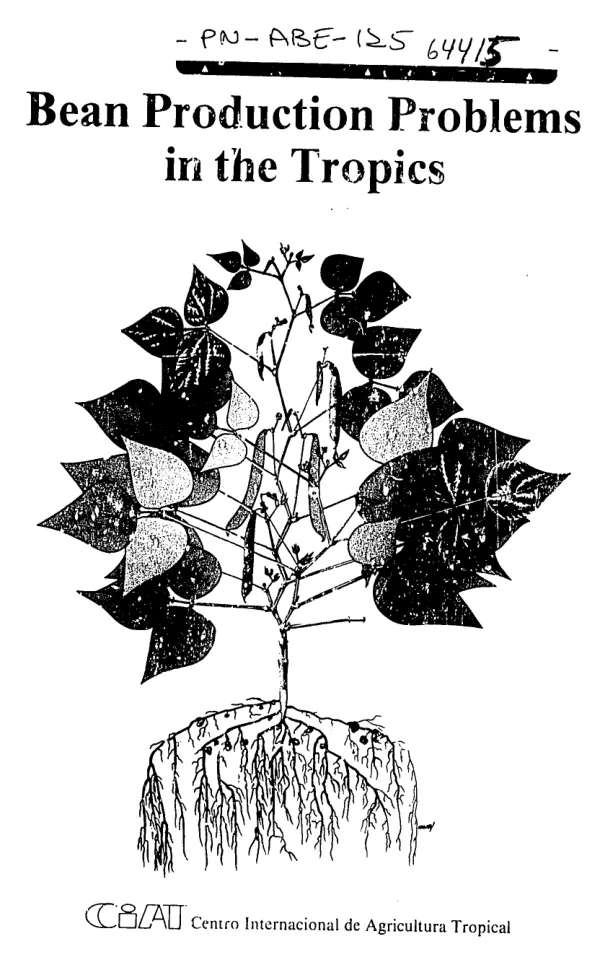
Bean production problems in the tropics
The common dry bean, Phaseolus vulgaris, is the most important food legume for direct human consumption in the world.
Schwartz, Howard F., ed.; Pastor-Corrales, Marcial A., ed. · 1989
Sign in to readA free account is required to download.
Abstract
But its production in tropical climates is besieged by an array of disease, insect, and soil fertility constraints. Diseases are often the greatest problem in tropical bean production, particularly in Latin America. More plant pathogens, greater pathogenic variation, and more virulent isolates of these pathogens are found attacking beans in Latin America and Africa than in temperate regions. The prevalence and importance of each disease, however, varies considerably with locality, season, year, and cultivar. Insect pests also cause considerable pre- and post-harvest damage to bean crops. Some pests are restricted to one continent (e.g., the bean fly in Africa or the bean pod weevil in Mexico and Central America), while other insect pests are widespread in most tropical bean-producing regions (e.g., bruchids and leafhoppers). Finally, in Latin America and Africa, beans are grown on many different soil types, which often limit plant growth and yields because of nutritional deficiencies and toxicities. This book brings together the work of 29 bean researchers to present an exhaustive look at bean production problems in the tropics. Major subjects include: specific fungal, bacterial, viral, and mycoplasma diseases (including leaf spots, rust, anthracnose, root rot, blight, mold, and viruses transmitted by aphids, beetles, and whiteflies); insects amd other pests; and other production constraints, such as nutritional disorders, nematodes, and seed pathology.
![Utilization of low dose irradiation for senescence retardation and desinfestation [de-infestation] of crops important to development of tropical countries](https://covers.devme.ai/gen/84688.webp)