USAID. MISSION TO BELIZE
Belize enterprise for sustained technology (BEST)
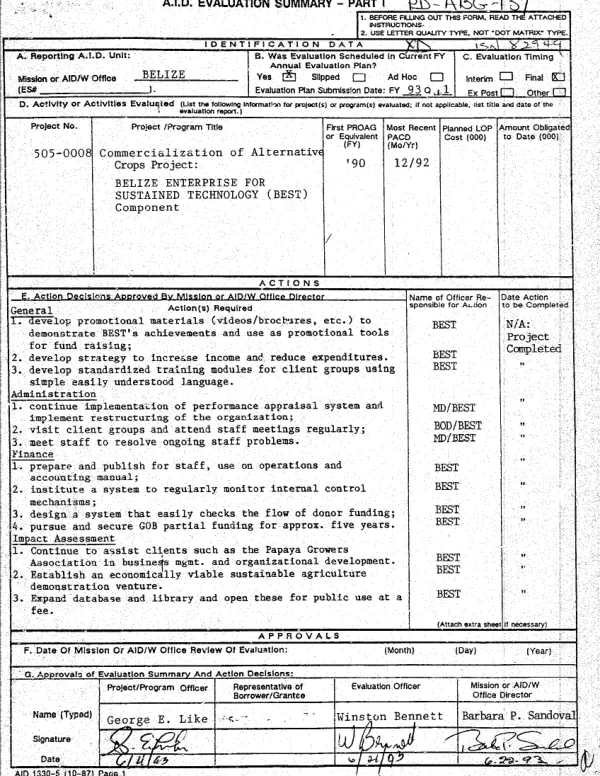
Summarizes final evaluation (XD-ABB-600-A) of a project to strengthen the capacity of the Belize Enterprise for Sustained Technology (BEST) in providing management and technical services to low-income farm groups.
1990
Sign in to readA free account is required to download.

Abstract
External evaluation covered the period FY86-3/90. BEST performs an essential service to rural organizations and is most effective when its inputs are properly tailored to the organization"s stage of development and when supervision or assistance to a group extends over a long period of time. BEST services are not useful if basic organizational structures and member support mechanisms are not in place. Although BEST personnel are well qualified, frequent staff turnover disrupted the continuity of TA and reduced the project"s field efficiency. BEST tries not to intrude on the territory of others working with rural organizations. The NGO/PVO community have different policies on the manner in which to assist cooperatives and other farm associations. Some prefer to offer only grants or subsidized loans to rural groups; others, such as BEST, charge a fee for services rendered. The clientele sometimes manipulate the process to get maximum service and resource at little or no costs. BEST"s forte as opposed to other NGO/PVO"s is a relatively well-focused agenda of services. Moreover, BEST has taken a leadership role in reducing duplication and wastefulness within the NGO community. BEST maintains a generally accepted accounting system with various checks and balances, but no written internal control procedures exist. Two major lessons were learned. (1) Projects to support PVO"s and NGO"s should require plans for sustainability to be implemented before the PACD. (2) The implementation of financial discipline within rural Belizean organizations is constrained by clients" low levels of education and internal financial management and requires long-term efforts.
Related documents