ADVANCED ENGINEERING ASSOCIATES INTERNATIONAL, INC. /SGGA
Bosnia and Herzegovina (BiH) Regulatory and Energy Assistance Project (REAP)
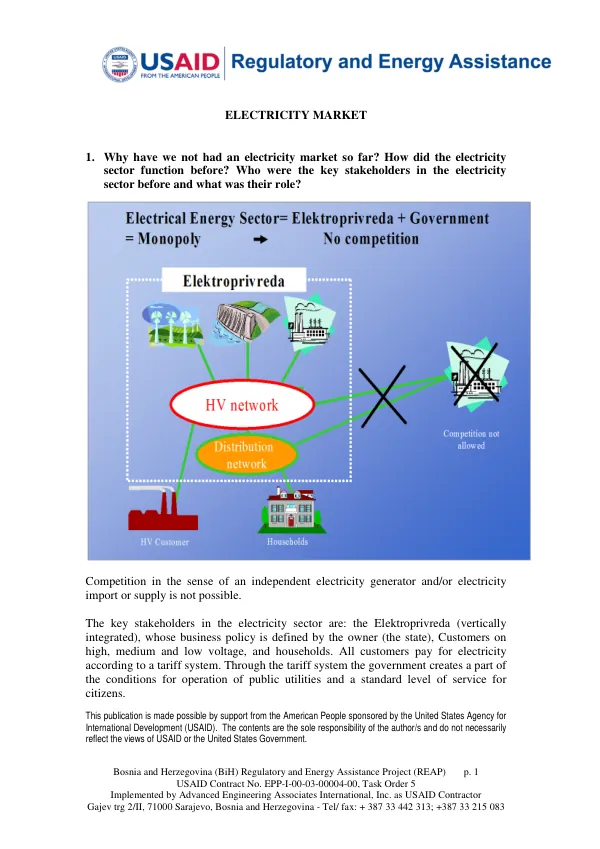
The electricity sector in Bosnia and Herzegovina (BiH) is vertically integrated, with Elektroprivreda (EP) being the sole provider of electricity services.
2014 · 9 pages
Sign in to readA free account is required to download.
Abstract
EP's business policy is defined by the state, and customers pay for electricity according to a tariff system. The tariff system is used to create conditions for the operation of public utilities and establish a standard level of service for citizens. The European Union (EU) has established a unified market for electricity and gas to ensure the future of energy and improve the competitiveness of its industry in the world market. The EU's goal is to create a technically and economically optimal development of new generation and transmission capacities, as well as to establish operation efficiency of EP companies. The EU has also initiated the establishment of the Energy Community in Southeast Europe (SEE) to optimize the development and utilization of energy resources in the region. The establishment of an electricity market in BiH is necessary to encourage the construction of technologically and economically optimal generation capacities, optimize the utilization of generation capacities, and reduce costs for electricity generation. A regional market will also enable the optimization of consumption and costs of operation of the system, drive enhanced efficiency of power utility operation, and attract investors. Additionally, a well-organized and attractive market will provide for safety and reliability of supply with electricity, lower costs of reserve capacities, and lower costs of operation of a larger electricity sector. The establishment of an electricity market requires radical reform of the electricity sector, which includes ensuring reliable delivery of electricity for all customers, establishing a clear regulatory regime, attracting new investors, and promoting economically healthy and sustainable development of the electricity sector. This will involve establishing regulatory bodies, transmission and distribution companies, and an independent system operator, as well as ensuring the presence of competition in the segment of electricity generation and supply. There are different models of markets and combinations thereof that function in the world, including the Pool, Single Buyer, and Third Party Access (TPA) models. The Pool model involves the establishment of a wholesale market that functions according to the principle of offers, where generators give their offers/capacities to cover consumption planned by the pool operator. The Single Buyer model involves the sale of all generation in the system to a single buyer, who further sells electricity to customers. The TPA model involves producers and traders/suppliers competing to sell electricity to buyers through bilateral contracts, with conditions for access and utilization of the transmission network specified in the Grid Code.