USAID DEC
Bosnia and Herzegovina (BiH) Regulatory and Energy Assistance Project (REAP) Case Study
Sign inADVANCED ENGINEERING ASSOCIATES INTERNATIONAL, INC. /SGGA
Bosnia and Herzegovina (BiH) Regulatory and Energy Assistance Project (REAP) Case Study
The Bosnia and Herzegovina (BiH) Regulatory and Energy Assistance Project (REAP) is a USAID-funded initiative aimed at promoting a competitive and efficient energy market in BiH.
2011 · 8 pages
Sign in to readA free account is required to download.
Abstract
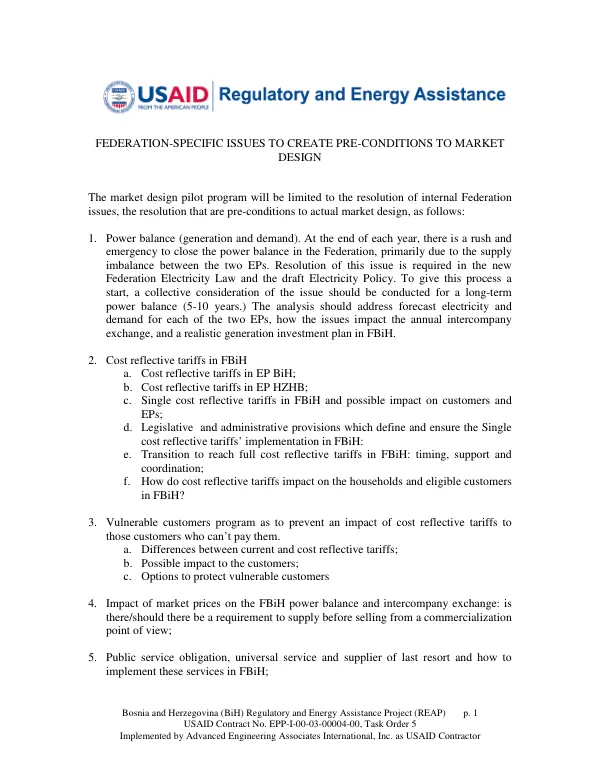
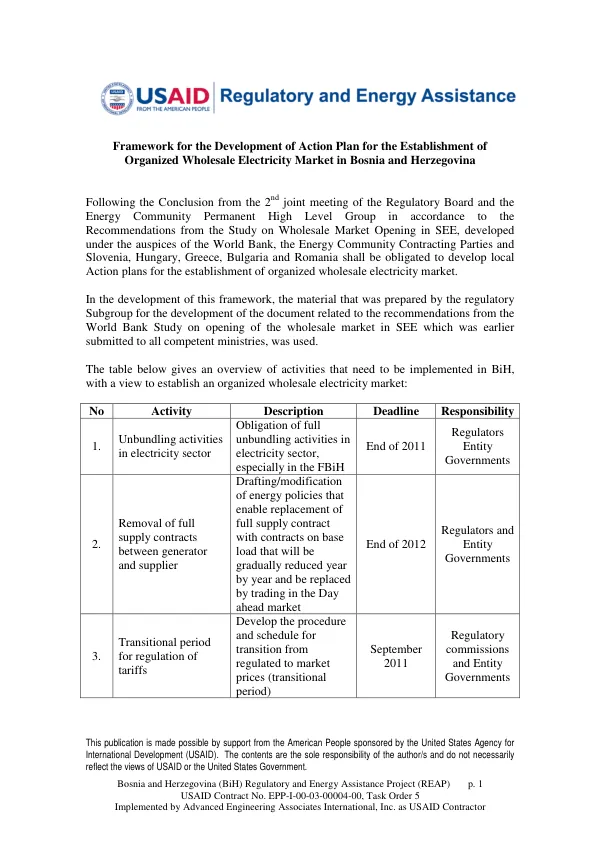
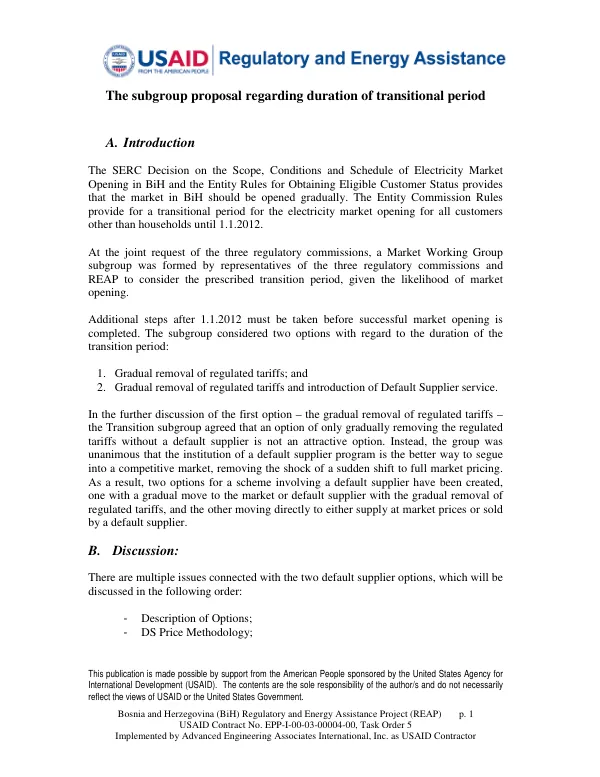
Implemented by Advanced Engineering Associates International, Inc., the project focuses on regulatory and energy assistance to support the development of a well-functioning wholesale market. The REAP project involves various stakeholders, including independent suppliers, eligible customers, balancing responsible parties (BRPs), independent system operators (ISO), transmission system operators (Transco), and distribution system operators (DSOs). The project's objective is to analyze different scenarios and determine whether the necessary processes and requirements are in place for a successful market opening. One of the key scenarios to be analyzed is the supply of electricity by a third-party supplier, other than the incumbent. This scenario involves a supplier providing electricity to a group of customers, including Cementara Kakanj, 35 kV EP BiH customers, 10 kV ERS customers, and 10 kV EPHZHB customers. The total demand for electricity from these customers is approximately 352.4 GWh per year, with a yearly capacity of around 40.2 MW. The cost of supplying electricity to these customers is estimated to be around 1.174.666 Euros per month, based on a market price of 40 Euros per MWh. The metering system in place is a mix of interval meters and simple meters that register the monthly peak demand. The analysis will determine whether the existing metering system is adequate to ensure that customers pay only for the costs they incur. The case study will also examine scenarios where the supplier notifies the regulator that it will go out of business in three months. In this scenario, the analysis will focus on the safety net and the process for switching customers to a new supplier of last resort (SOLR). The study will identify any gaps in processes, contracts, and technical issues that need to be addressed to ensure a smooth transition. The outcome of the case study will be a gap analysis that highlights the missing processes, contracts, and technical issues that need to be addressed to ensure the sector's readiness for market opening. The study will provide a clear, realistic, and unbiased view of the actual status of the sector's readiness for market opening. The next steps in the project will involve establishing a group with REAP assistance to develop the scenario and statement of work (SOW), as well as a detailed work plan.
Related documents