USAID DEC
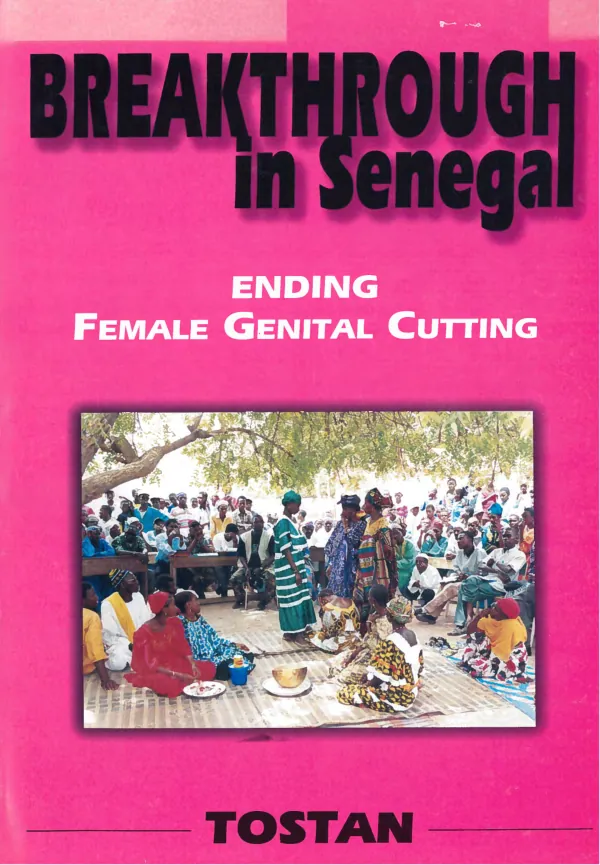
Breakthrough in Senegal : the process that ended female genital cutting in 31 villages
Sign inPOPULATION COUNCIL
Breakthrough in Senegal : the process that ended female genital cutting in 31 villages
On July 31, 1997, forty women of the village of Malicounda Bambara, Senegal, made a historic and public announcement before 20 journalists: they, their husbands, the village chief, and the religious leaders had decided to end the practice of female genital cutting (FGC) in their community.
1999
Sign in to readA free account is required to download.
Abstract
This decision was made following the implementation of the Tostan ("breakthrough") basic education program in their village, even though ending FGC had not been a specific objective of the Tostan program. The community"s decision spread to 10 more villages in the region of Thies and then to 18 villages in the region of Kolda -- 31 villages in all. The present paper documents this experience of the Malicounda Bambara community. Part 1 explains the Tostan education program and then discusses the specific issue of FGC. Part 2 describes what happened in the process of ending FGC in the 31 villages. Part 3 analyzes the factors contributing to the villagers" decision to end FGC and indicates lessons learned from the Tostan experience. Without doubt, the decisive factor was basic education: the technical information, the strategies for social transformation, and the confidence and self-determination that the women gained through the participatory methods of the Tostan program were essential in the community"s decision to end FGC. Classroom dialogue was important in overcoming the religious taboo against discussing FGC. Other important factors were good timing and the positive participation of Islamic leaders; public declarations also played a key role. The breakthrough in ending FGC in the 31 villages has led Tostan to promote a strategy for ending FGC in other areas of Senegal as well as in other African countries. The strategy includes four basic steps: (1) basic education; (2) public discussion; (3) public declaration; and (4) media campaigns.
![Critical analysis of interventions against FGC [female genital cutting] in Egypt](https://covers.devme.ai/gen/17105.webp)