USAID. BUR. FOR SCIENCE AND TECHNOLOGY. OFC. OF NUTRITION
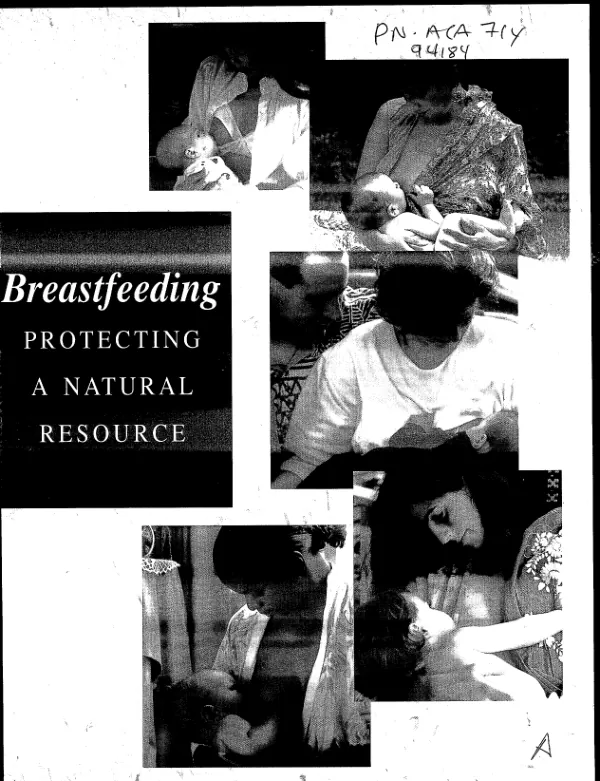
Breastfeeding for child survival strategy
A strategy for enhancing the breastfeeding component of A.I.D."s child survival, health, population, and nutrition programs is presented.
1990
Sign in to readA free account is required to download.
Abstract
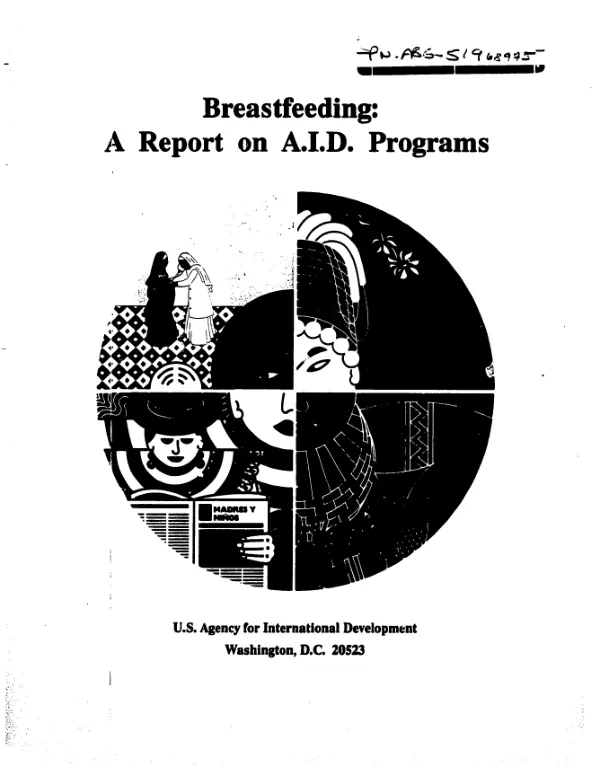
The specific goals of the A.I.D. strategy are to increase the percentage of infants who are: breastfed within one hour of delivery, exclusively breastfed from birth through 4-6 months of age, fed appropriate complementary foods by the end of 6 months, and breastfed for one year or longer. The report makes explicit the following benefits of breastfeeding and its critical relationship to child survival: (1) breast milk is ideal food for infants; (2) breastfeeding saves lives; (3) breastfeeding saves money; (4) breastfeeding prevents diarrhea; (5) breastfeeding confers immunity; (6) breastfeeding protects mothers" health; and (7) breastfeeding is effective family planning. Successful approaches to breastfeeding promotion and support are identified as lactation management training for hospital-based and other health workers, communication and social marketing, and mother-to-mother support groups. Effective methods also need to be developed to facilitate breastfeeding by working women and to reach women outside the formal health sector. There is great potential for incorporating such interventions into ongoing programs, such as those aimed at diarrheal disease control, immunization, nutritional improvement, child spacing, pre-natal care, health care financing, and food aid. A list of pertinent actions to be taken by A.I.D./W and field Missions concludes the report.
Related documents
![[LINKAGES] Ghana](https://covers.devme.ai/gen/58247.webp)
![[LINKAGES] results](https://covers.devme.ai/gen/19553.webp)
![[LINKAGES] results](https://covers.devme.ai/gen/43736.webp)