USAID DEC
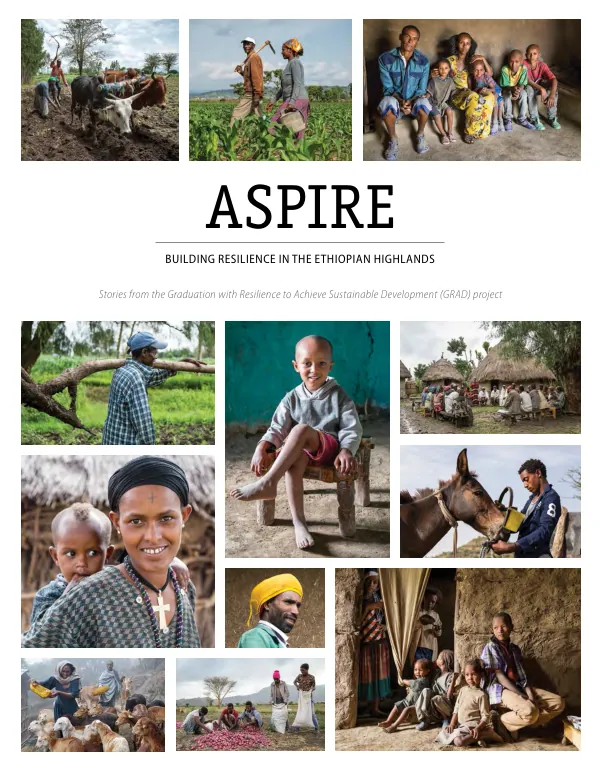
Building Resilience in the Ethiopian Highlands: Stories from the Graduation with Resilience to Achieve Sustainable Development (GRAD) project
Sign inCARE ETHIOPIA
Building Resilience in the Ethiopian Highlands: Stories from the Graduation with Resilience to Achieve Sustainable Development (GRAD) project
The Graduation with Resilience to Achieve Sustainable Development (GRAD) project was developed by USAID Ethiopia to complement the government's Productive Safety Net Program (PSNP).
2016 · 68 pages
Sign in to readA free account is required to download.
Abstract
The project aimed to help households in 16 highland districts "graduate" from dependence on cash and food entitlements. GRAD worked with approximately 65,000 PSNP households, and as the project nears its close, most GRAD households have graduated from the PSNP or are close to doing so. The project's success can be attributed to an array of practical interventions, including linking households with savings and credit, forming production and marketing groups, introducing and supporting new economic activities suitable for women, fostering adaptation to climate change, and promoting behavioral change around childhood nutrition, gender relations, and harmful norms and practices. These interventions have brought dramatic improvements in participants' short-term well-being while building resilience for the long term. However, the project's success also highlights the importance of inner strength, ambition, motivation, and aspiration among individuals. GRAD participants have demonstrated that these qualities are essential for truly benefiting from a project's investments. Aspiration is seen as the counterforce to dependency, and the project has helped create this attitude in its beneficiaries. The stories in this book illustrate the aspirations of diverse individuals associated with GRAD and how they have multiplied the relatively modest support provided by the project to produce greater impacts for themselves, their families, and their communities. The GRAD project has had a significant impact on the lives of its participants. For example, GRAD beneficiary Tumay Ashebir reported that before joining the project, she had no ideas about how to improve her livelihood. However, GRAD opened her mind to a bright future, and she has since become ambitious about her aspirations. The project has also exposed people to new options and opportunities, and its participants have become increasingly ambitious in their aspirations. The stories in this book demonstrate the power of aspiration and the impact it can have on individuals and communities. The GRAD project has been implemented in various regions of Ethiopia, including Tigray, Amhara, SNNP, and Oromia. The project has worked with households in 16 highland districts, and its interventions have been tailored to the specific needs and contexts of these areas. The project's success has been attributed to its ability to create an "aspirational window" for its participants, exposing them to new options and opportunities and helping them to become more ambitious in their aspirations.
Related documents