USAID. MISSION TO EGYPT
Cairo sewerage I
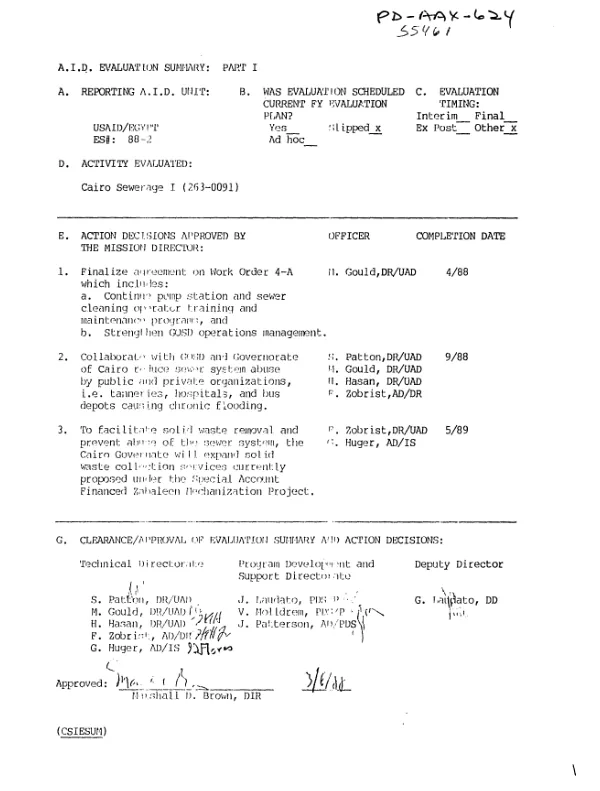
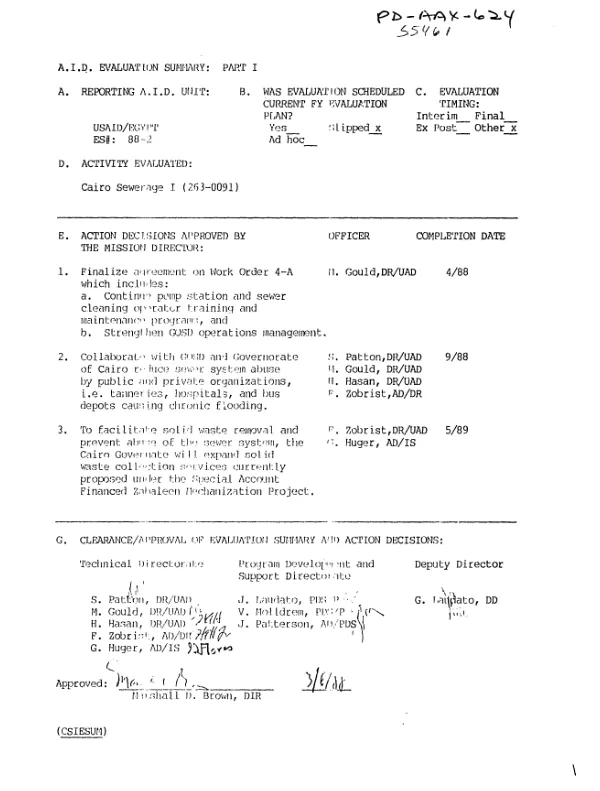
Summarizes attached evaluation of a project to rehabilitate Cairo's sewerage system.
1988
Sign in to readA free account is required to download.
Abstract
Evaluation covered the period 1981-87 and was based on document review, inspections of sewers and pump stations, and interviews with sewer cleaners and repairmen, community leaders and residents, and project staff. The evaluation found that there had been an 84% reduction in chronic sewerage flooding since the project was initiated in 1981. Of the 67 areas with chronic flooding problems identified in 1981, only 11 remain, with 12 other areas experiencing occasional, localized flooding. Similarly, residential complaints about flooding have dropped markedly; Cairo sanitation officials credit the project with this drop. Surveys of residents show that 76% are aware of the project and could cite problems which the project had reduced (e.g., foul odors, mosquitoes and flies, increase in diseases, difficulty in walking or driving through the streets, etc.). Continuing flooding problems can be traced in some areas to increased population density and illegal housing; in other areas, lack of waste disposal systems lead residents to dump garbage directly into the sewers. Industries and public institutions are also known to abuse the sewerage system by dumping chemical and solid wastes. The Mission comments that continued flooding is largely caused by industrial abuse. Solid wastes (from tanneries in particular) damage and clog secondary pipelines, which the Cairo General Organization for Sanitary Damage cannot afford to correct or replace. Sewer maintenance operations are being upgraded, however, and the Mission will work with the Governorate of Cairo (GC) to end industrial system abuse. The GC has also begun a pilot garbage collection service in two affluent areas; if successful, the service will be expanded.
Related documents