USAID DEC
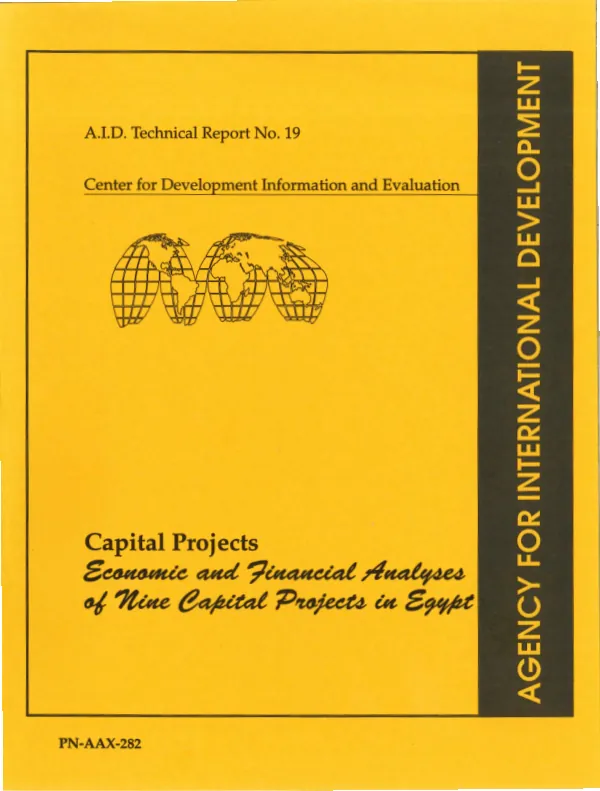
Capital projects : economic and financial analyses of nine capital projects in Egypt
Sign inUSAID. BUR. FOR POLICY AND PROGRAM COORDINATION. CENTER FOR DEVELOPMENT INFORMATION AND EVALUATION (CDIE)
Capital projects : economic and financial analyses of nine capital projects in Egypt
Over the period 1977-92, A.I.D.
Hanrahan, Michael|Walker, James|Makary, Samir|Goode, Suzanne|Hakim, Rasha Abdul|Lofti, Ingi|Mina, Wasseem · 1994
Sign in to readA free account is required to download.
Abstract
funded nine capital projects in Egypt, which collectively increased electric power generation, introduced a modern telephone system in Cairo and Alexandria, and rehabilitated a water and sewer system that served 23 million people. This study presents detailed ex post facto analyses of the projects' economic and financial internal rates of return. The methodology, assumptions, and data are examined and described. Results indicate a mixed performance, with generally low to medium financial and economic rates of return. These low rates are not due to technical problems -- the projects were well designed, used appropriate technology, and were operated in a sound manner. In large measure, the poor performance was due to the Egyptian Government's poor economic policies, such as government price controls, regulations, subsidies, and employment and management structures that resulted in inefficient production and inefficient use of project outputs. A clear lesson is that in a bad policy environment, even technically sound projects cannot generate a good rate of return. In the last few years, Egypt has initiated several policy reforms that have corrected a number of inappropriate prices and subsidies. These actions, it is hoped, will improve the economic rates of return on future capital projects. (Author abstract, modified)
Connected topics
Related documents