USAID DEC
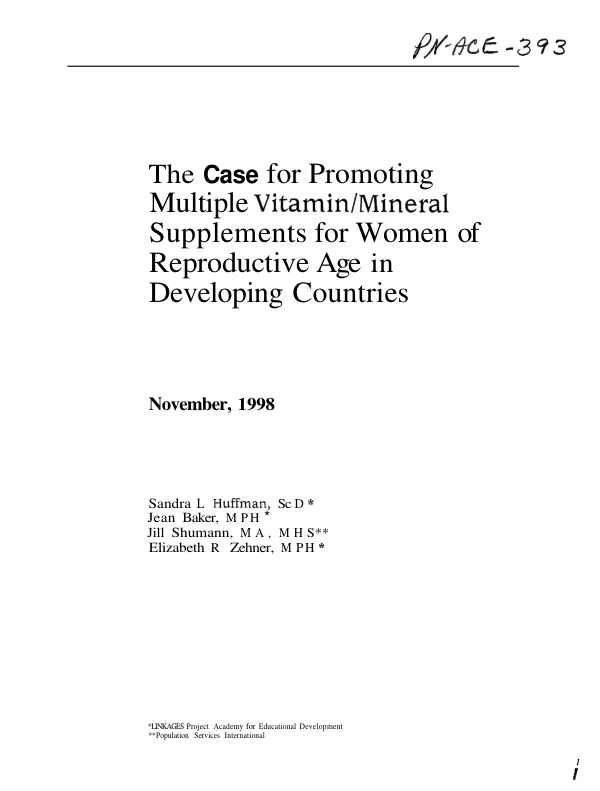
Case for promoting multiple vitamin/mineral supplements for women of reproductive age in developing countries
Sign inACADEMY FOR EDUCATIONAL DEVELOPMENT, INC. (AED)
Case for promoting multiple vitamin/mineral supplements for women of reproductive age in developing countries
The adverse effects of deficiencies in vitamin A, iron, and folic acid, which include night blindness in pregnant and lactating women and iron deficiency anemia, are well known.
Huffman, Sandra L.; Baker, Jean · 1998
Sign in to readA free account is required to download.
Abstract
Low intakes of these and other micronutrients, including zinc, calcium, riboflavin, B6, and B12, also have consequences for women"s health and pregnancy outcomes, as well as for breastfed children"s health and nutritional status. Since it is difficult to meet nutrient needs with diet alone, especially for pregnant women and those whose consumption of animal products, fortified foods, and diverse diets is limited, supplementation of women"s diets with vitamins and minerals should be one component of a strategy to improve micronutrient status among women in developing countries. In fact, since multiple nutrient deficiencies coexist, the benefit of multiple micronutrient supplements is becoming increasingly apparent. However, there are several issues for program managers to consider prior to implementing micronutrient supplementation programs. These include the following: (1) Which reference standards will be used to determine nutrient levels to include in the supplements? (2) Which nutrients will be included and in what quantities? (3) In purchasing supplements, what weight should be accorded to: supplement availability, safety, costs, quality, and acceptability and compliance? These issues are discussed in this study and guidance is provided on the selection of appropriate supplements for pregnant women and for women of reproductive age in developing countries. (Author abstract, modified)