USAID
Chad Rural Water and Sanitation Project
The Chad Rural Infrastructure Construction Project was initiated in 1990 with funding from the United States Agency for International Development (USAID).
2011 · 5 pages
Sign in to readA free account is required to download.
Abstract
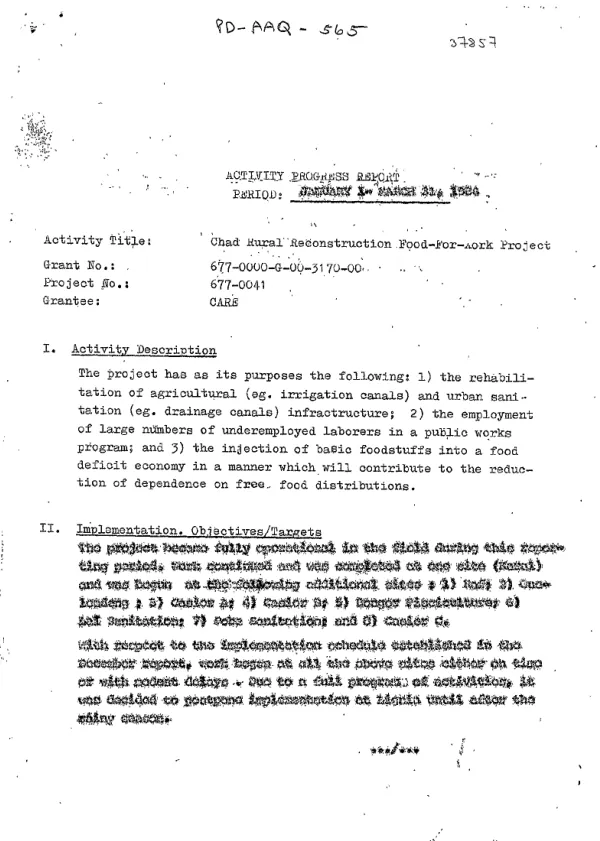
The project aimed to rehabilitate agricultural and urban sanitation infrastructure, provide employment opportunities for underemployed laborers, and inject basic foodstuffs into the food deficit economy. The project's objectives included the rehabilitation of irrigation canals, drainage canals, and other rural infrastructure, as well as the construction of roads, bridges, and other community facilities. Implementation objectives included the employment of large numbers of underemployed laborers in a public works program, the provision of training and equipment to local communities, and the establishment of a system for monitoring and evaluating project progress. The project also included the construction of a water supply system, a sanitation system, and a road network. Additionally, the project aimed to promote the use of local materials and labor, and to establish a system for maintaining and repairing the infrastructure. The project was implemented in several phases, with the first phase focusing on the rehabilitation of irrigation canals and the construction of roads and bridges. The second phase focused on the construction of a water supply system, a sanitation system, and a road network. The third phase included the establishment of a system for monitoring and evaluating project progress, as well as the provision of training and equipment to local communities. The project was carried out in collaboration with the Government of Chad, local communities, and other stakeholders. The project's activities included the construction of 30 kilometers of roads, the rehabilitation of 15 kilometers of irrigation canals, and the construction of 10 community centers. The project also included the provision of training and equipment to local communities, as well as the establishment of a system for maintaining and repairing the infrastructure. The project's impact was significant, with the rehabilitation of irrigation canals and the construction of roads and bridges leading to improved agricultural productivity and increased access to markets. The project also helped to reduce poverty and improve living standards in the project area. The project's success was due in part to the strong collaboration between the project team, the Government of Chad, and local communities, as well as the effective use of local materials and labor. The project's monitoring and evaluation system was established to track progress and identify areas for improvement. The system included regular site visits, surveys, and assessments to monitor the project's impact and identify any challenges or issues that arose during implementation. The project's evaluation revealed that the project had achieved its objectives, with significant improvements in agricultural productivity, access to markets, and living standards in the project area.