USAID DEC
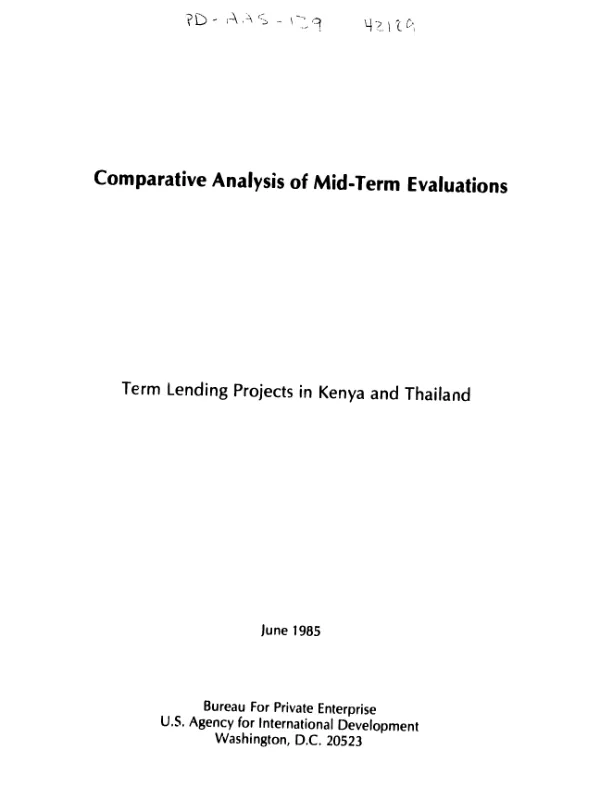
Comparative analysis of mid-term evaluations : term lending projects in Kenya and Thailand
Sign inUSAID. BUR. FOR PRIVATE ENTERPRISE
Comparative analysis of mid-term evaluations : term lending projects in Kenya and Thailand
Evaluates effectiveness of A.I.D.
1985
Sign in to readA free account is required to download.
Abstract
strategy to channel term credit and other services to small and medium scale rural enterprises (SME's) through commercial banks. Comparative study is based on mid-term evaluations of projects in Kenya and Thailand. The projects have been successful, reaching target groups at low cost to A.I.D. and already serving as catalysts for further private enterprise development (USAID/K has developed a large follow-on project, and USAID/T a major rural SME industrial strategy). Both projects, however, have suffered from implementation problems resulting mainly from three factors: understaffing at the AID/PRE Office of Investment, delays in the Business Advisory Services (BAS) function, and problems within participating banks (e.g., organizational problems, uncertainty as to BAS activities). These difficulties contributed to a slow draw down of loan funds in Kenya and late or limited use of grant funds in both countries. Approaches to implementation have differed in the two countries. The Kenya Commercial Finance Company (KCFC) has tried to focus on the lower end of the target group, making 38 loans averaging $43,000, and has been able to draw down only $1.8 million (m) of the $5m credit line. The KCFC has charged the maximum allowable interest rate, including a 1% fee to insure against foreign exchange risk; in many cases KCFC failed to make reliable judgments as to its clients' creditworthiness. The Siam Commercial Bank (SCB), on the other hand, made larger loans (15 averaging $266,747) which had more immediate impact, but tended to reach well-established medium scale enterprises; the SCB lent at below market rates, passing on the exchange risk to borrowers, and managed its portfolio professionally. The key lesson is that a good preliminary understanding of the objectives and policy limitations (i.e., risk-avoidance) of the commercial institution involved is required, and that it cannot be assumed that an institution is fully capable of implementing a loan or grant agreement. Other lessons: A.I.D. can and should encourage more LDC commercial lenders to undertake SME term lending; and frequent monitoring and continous management are necessary due to the experimental nature of the projects. Recommendations, particularly concerning the BAS, are provided.