USAID DEC
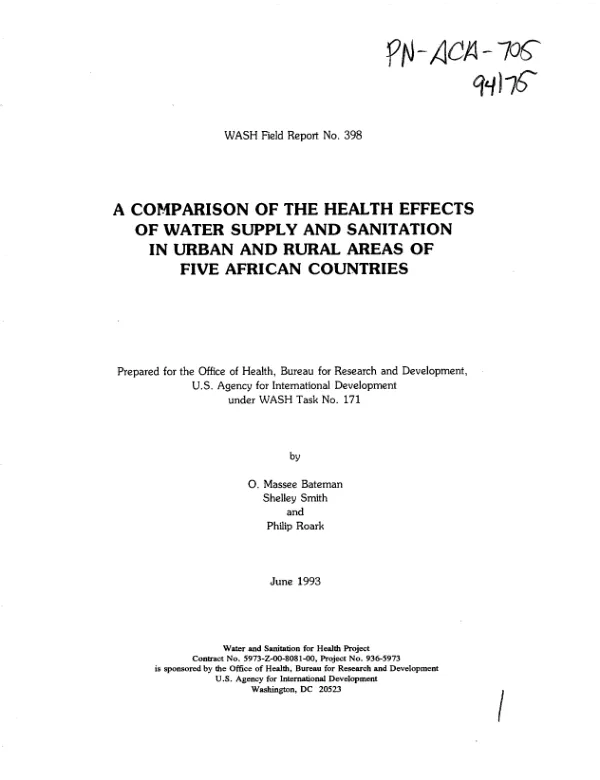
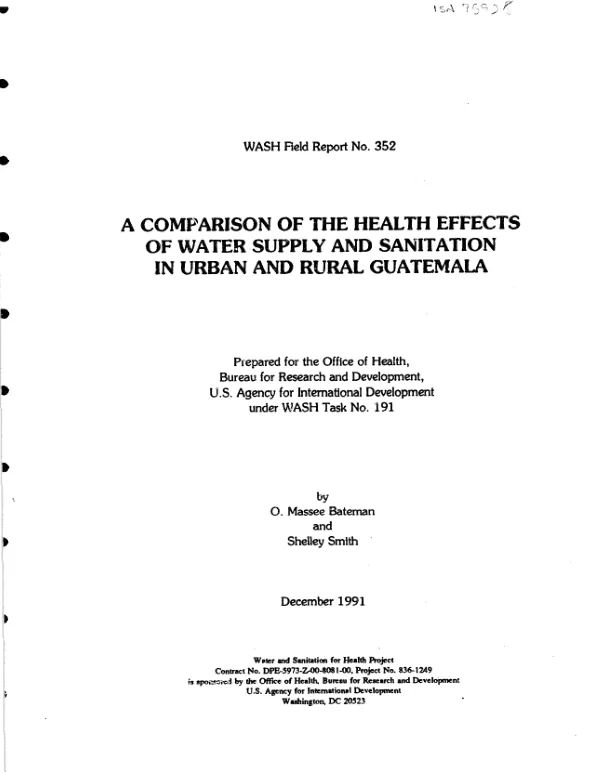
Comparison of the health effects of water supply and sanitation in urban and rural Guatemala
Sign inCAMP DRESSER AND MCKEE, INC. (CDM)
Comparison of the health effects of water supply and sanitation in urban and rural Guatemala
Worldwide, more than 1 billion people lack access to safe water supplies, and more than 2 billion to adequate sanitation facilities.
Bateman, O. Massee; Smith, Shelley · 1991
Sign in to readA free account is required to download.
Abstract
This report provides information helpful in targeting water supply and sanitation (WS&S) projects to make the most of limited resources. The data used in the analysis are from the 1987 Guatemala Demographic and Health Survey. The analysis produced several major findings. (1) Water and sanitation services are important interventions for improving child health in both rural and urban environments. (2) Child health is related to a greater, though not statistically significant, degree to sanitation (defined as sanitary disposal of feces) than to water supply. (3) Improved sanitation appears to be as or more strongly associated with improved health in the rural setting as in the urban. (4) Most importantly, community measures of sanitation are better indicators of child health risk than is individual access to improved sanitation. In other words, children living in communities with a high level of sanitation coverage were found to have the same low risk of stunting whether or not they have individual access to a toilet. A major policy implication is that sanitation should receive the same degree of attention and resources as water supply in programs to improve health. In addition, WS&S programs should aim to ensure that at least 75% of the community has access to adequate sanitation services and uses them properly.
Related documents
Documents in this collection
 1993
1993USAID DEC
Planning for urban environmental health programs in Central America : the development of water and sanitation-related environmental health indicators and the survey of existing data in three countries
Open record 1991
1991USAID DEC