NEW MEXICO STATE UNIVERSITY
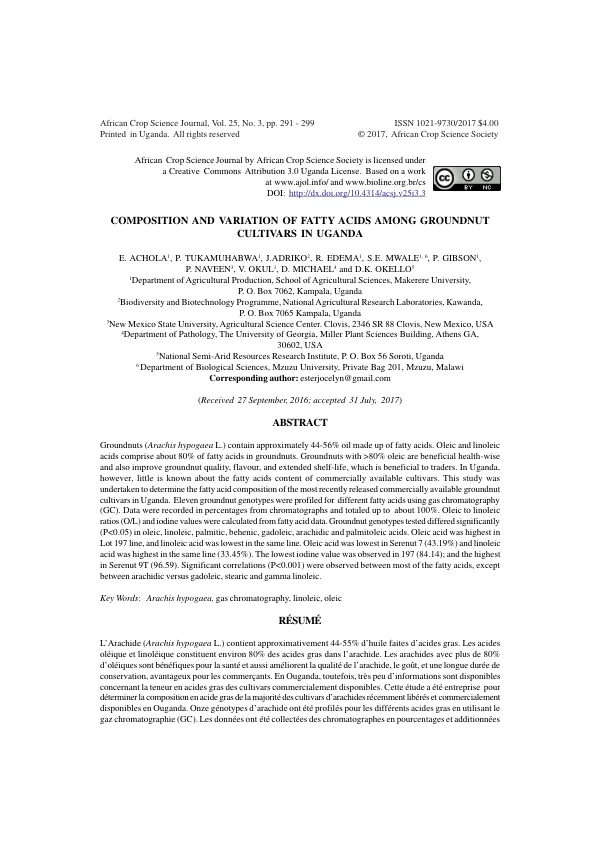
Composition and variation of fatty acids among groundnut cultivars in Uganda
Groundnuts (Arachis hypogaea L.)
2017 · 9 pages
Sign in to readA free account is required to download.
Abstract
are an important oilseed and cash crop for farmers in the arid and semi-arid tropics. In Uganda, groundnuts are a significant source of cash income and contribute to food security. The fatty acid composition of groundnuts plays a crucial role in determining their nutritional value and shelf life. Oleic and linoleic fatty acids constitute approximately 90% of the total fatty acids in groundnuts. Oleic acid, a monounsaturated fatty acid, has been associated with several human health benefits, including decreased risk of cardiovascular disease and reduced levels of serum low-density lipoproteins (LDL) cholesterol. In contrast, linoleic acid, a polyunsaturated fatty acid, is susceptible to oxidative rancidity and has been linked to an increased risk of inflammation, cancers, cardiovascular disease, and neurological disorders. Eleven groundnut cultivars were used in this study to profile their fatty acid composition. The cultivars were obtained from the National Groundnut Improvement Department at National Semi-Arid Resources Research Institute (NaSARRI) in Uganda and from New Mexico State University (NMSU) Peanut Improvement Program, USA. The fatty acid extraction procedures were carried out according to the Association of Official Agriculture Chemists (AOAC International) 19th Edition. The results showed that the groundnut cultivars differed significantly in their oleic, linoleic, palmitic, behenic, gadoleic, arachidic, and palmitoleic acid content. Oleic acid was highest in Lot 197 line, while linoleic acid was lowest in the same line. The lowest iodine value was observed in 197, and the highest in Serenut 9T. Significant correlations were observed between most of the fatty acids, except between arachidic and gadoleic, stearic, and gamma linoleic. The study highlights the importance of knowing the exact quantities of fatty acids present per genotype to exploit the genetic potential of genotypes by breeders. The results of this study can be used to improve the quality and nutritional value of groundnuts in Uganda. The high oleic lines, such as Lot 197, have the potential to improve the shelf life and nutritional value of groundnuts, making them more beneficial for human consumption. The fatty acid composition of groundnuts is influenced by various factors, including the genotype, environment, and management practices. Understanding the fatty acid composition of groundnuts is essential for developing strategies to improve their nutritional value and shelf life. This study contributes to the existing knowledge on the fatty acid composition of groundnuts and highlights the importance of breeding for high oleic lines to improve the quality and nutritional value of groundnuts in Uganda. The results of this study have implications for the development of groundnut breeding programs in Uganda. The high oleic lines, such as Lot 197, can be used as a starting material for breeding programs aimed at improving the nutritional value and shelf life of groundnuts. The study also highlights the need for further research on the fatty acid composition of groundnuts and its relationship with environmental and management factors.