UNIVERSITY OF WISCONSIN AT MADISON. LAND TENURE CENTER (LTC)
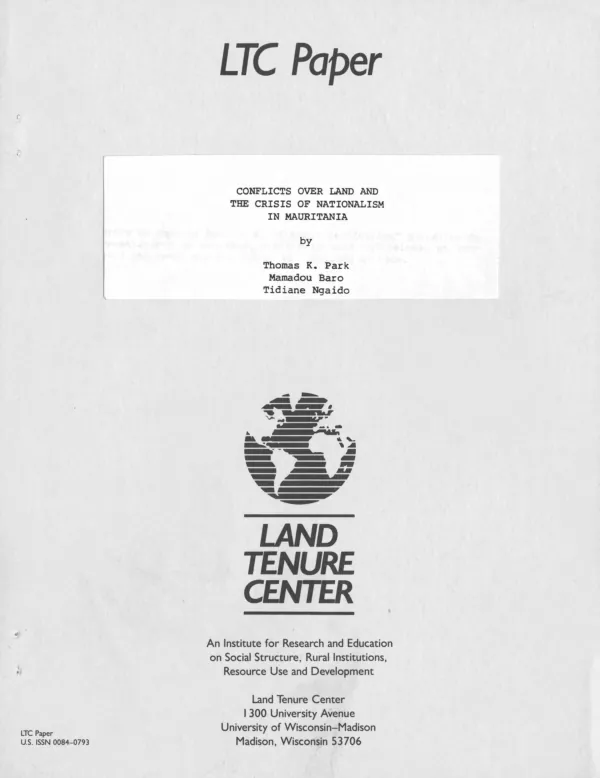
Conflicts over land and the crisis of nationalism in Mauritania
In the spring of 1989, a series of confrontations between farmers and Mauritanian troops on both sides of the Senegal River escalated into a major diplomatic crisis between Senegal and Mauritania resulting in the loss of life and property of thousands of individuals.
Park, Thomas K.; Baro, Mamadou +1 more · 1991
Sign in to readA free account is required to download.
Abstract
Countering a widespread belief, this paper views these events not as an international conflict between Senegal and Mauritania, but as a national dispute over access to land in Mauritania. The purpose of the paper is to trace the history of land policy in the country and examine the role of land tenure issues in the current conflict. In 1983, the Government of Mauritania abolished the traditional land tenure system, making individual ownership the norm and lawsuits concerning collectively held property inadmissable. These reforms, promoted as a form of Islamization, proved to be a vehicle for land grabbing by Moor business and governmental elites from black riverine populations with strong ties to Senegal. In this process, which has been facilitated by donors" insistence on privatization of the land and the individualization of tenure, black cultivators, particularly Halpulaar-en, are being squeezed out of the north bank under a variety of pretexts, in clear disregard of both long-established rights and recent legislation as well as international accords. For example, the 1983 law allows the state to claim uncultivated land, even if the farmer was not able to work the land due to drought. Specific recommendations for both modifying the 1983 legislation and resolving equity issues are presented in conclusion.
Connected topics