USAID DEC
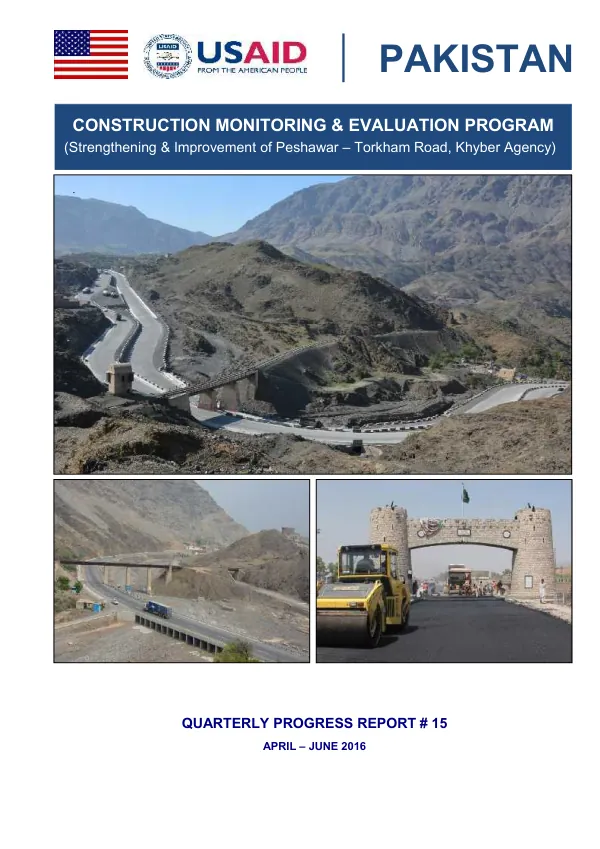
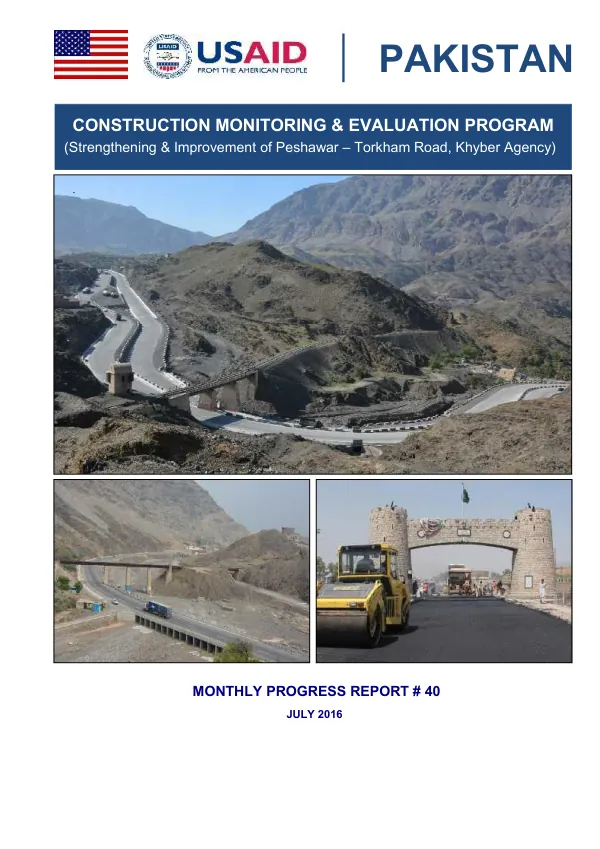
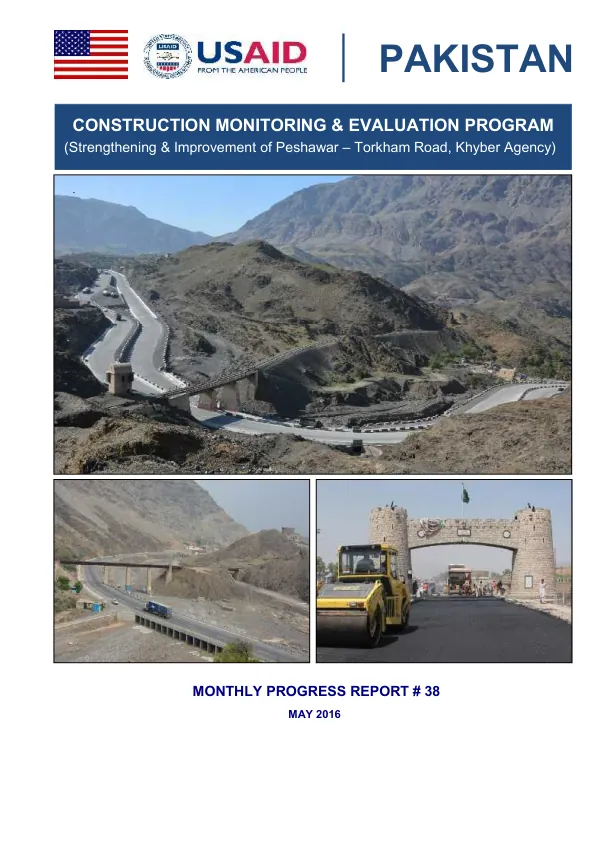
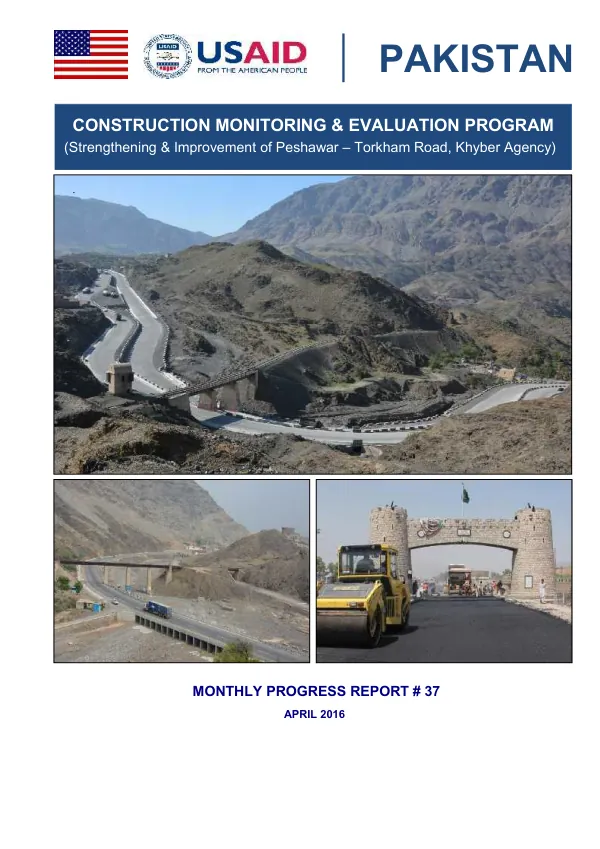
Construction Monitoring & Evaluation Program (Strengthening & Improvement of Peshawar – Torkham Road, Khyber Agency)
Sign inUSAID
Construction Monitoring & Evaluation Program (Strengthening & Improvement of Peshawar – Torkham Road, Khyber Agency)
The Peshawar-Torkham Road (PTR) project is a vital infrastructure development initiative aimed at strengthening and improving the road connectivity between Pakistan and Afghanistan.
2015 · 50 pages
Sign in to readA free account is required to download.
Abstract
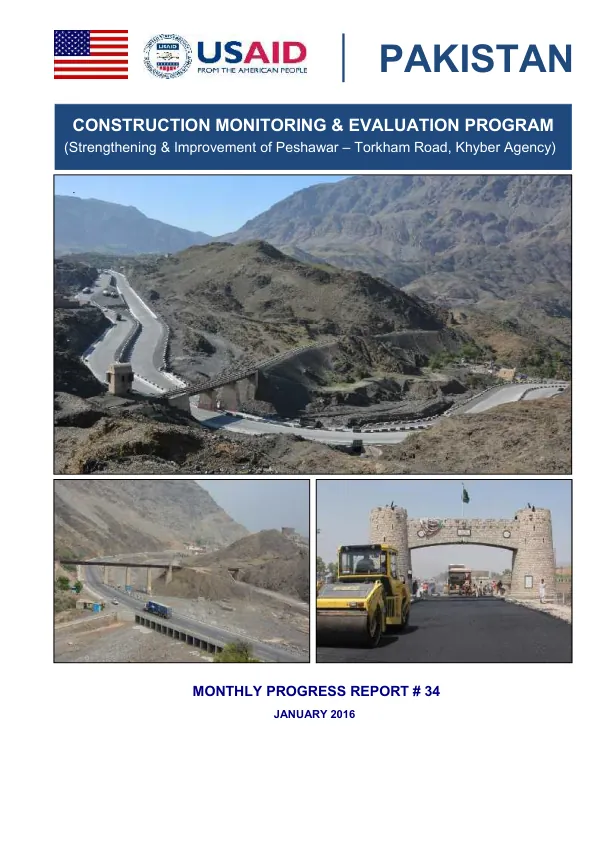
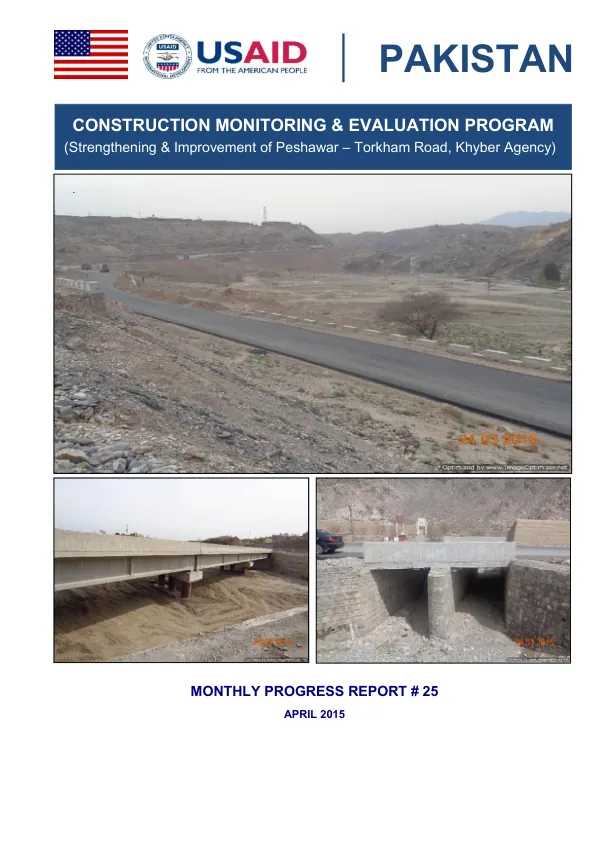
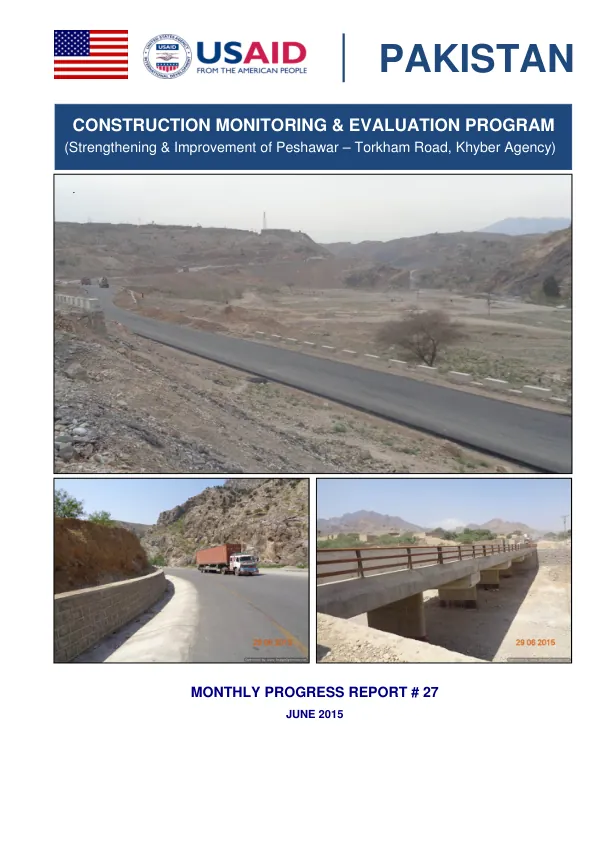
The project is a part of the National Highway (N-5) and plays a crucial role in the economic activities and provision of timely logistic support to security agencies in Khyber Agency. The project was initiated in October 2012 with an Activity Agreement signed between the FATA Secretariat and the US Agency for International Development (USAID) for a total funding of USD 67 million. The project is being implemented by the FATA Secretariat as the project proponent through the Frontier Works Organization (FWO) as the EPC (Engineer, Procure, and Construct) contractor. FWO is responsible for the design and construction of the project in accordance with the National Highway Authority's (NHA) specifications and standard engineering practices. The National Engineering Services of Pakistan (NESPAK) is providing design services for the project. As of June 2015, the project has achieved significant progress, with both flexible and rigid pavements of 38 km out of 46 km length substantially completed and open for traffic. The overall certified amount at the end of the reporting month was USD 32,542,804 out of the total budget of USD 67 million. The project has been divided into five packages (PILs), with PIL 01, PIL 02, PIL 03, and PIL 04 completed at 100% with all milestones certified. PIL 05, which includes sections IV, V, and VI, has achieved a progress of 6% during the reporting month, with a total physical progress of 83% and accruals of USD 21,126,197 out of USD 25,444,269. However, several matters require attention, including the carriageway width problem at Km 21+300, cost allocation, project steering committee meetings, role of FATA Secretariat and NHA, accelerated construction, process of engineer estimate approval, complexity in maintaining traffic on diversions/detours, and delay in utilities shifting from the construction corridor. These issues need to be addressed to ensure smooth project implementation and completion within the revised timeframe. The project has been monitored and evaluated through various activities, including field inspections, field observations and follow-up, meetings, and laboratory tests. Environmental compliance and security situation have also been monitored, with annexes provided for environmental monitoring reports, security reports, minutes of meetings, and photographs.
Related documents