COLORADO STATE UNIVERSITY
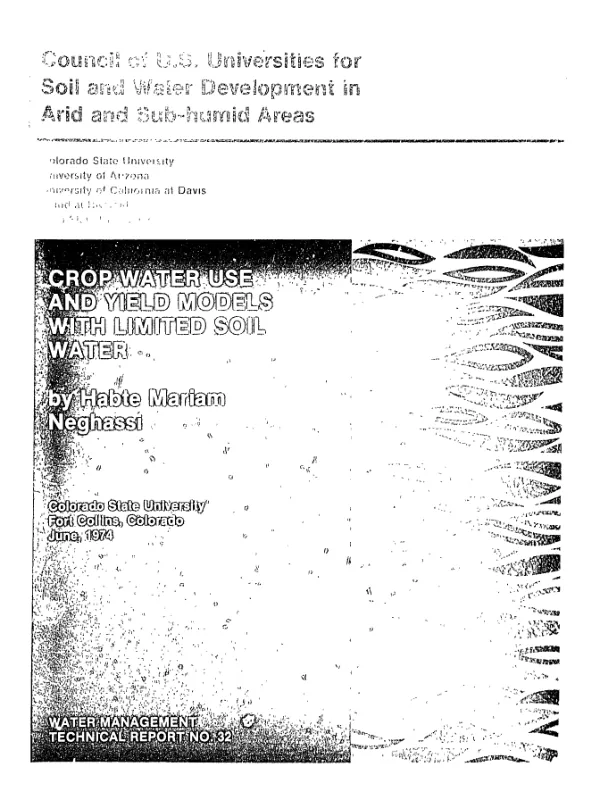
Crop water use and yield models with limited soil water
The objectives of this study were to estimate crop water use, formulate and test crop yield models, and compare various phenological indices using a secondary analyses of seven years hard red winter wheat (Triticum aestivum L.)
Neghassi, H. M. · 1970
Sign in to readA free account is required to download.
Abstract
data grown at North Platte, Nebraska. The crop was grown on a Holdrege silt loam soil which is uniform and representative of much of the land used for wheat production in the Northern and Central Great Plains. Dry matter yields and soil water contents were measured at booting, heading, soft dough, and maturity stages. Dry matter samples were also taken late fall of the preceding year. Grain yield was measured at harvest. Under the conditions of limited soil water studied, neither the application of mulch nor nitrogen had significant effects on grain yield. Year-to-year variation was highly significant. Wheat phenology was correlated to four climatic indices: number of days, growing degree days, solar thermal units, and potential evapotranspiration, each accumulated from spring growth initiation. The number of days was the least variable index.
Connected topics