USAID DEC
Data reliability in cross-national research; a test employing black Africa country experts
Sign inRICE UNIVERSITY
Data reliability in cross-national research; a test employing black Africa country experts
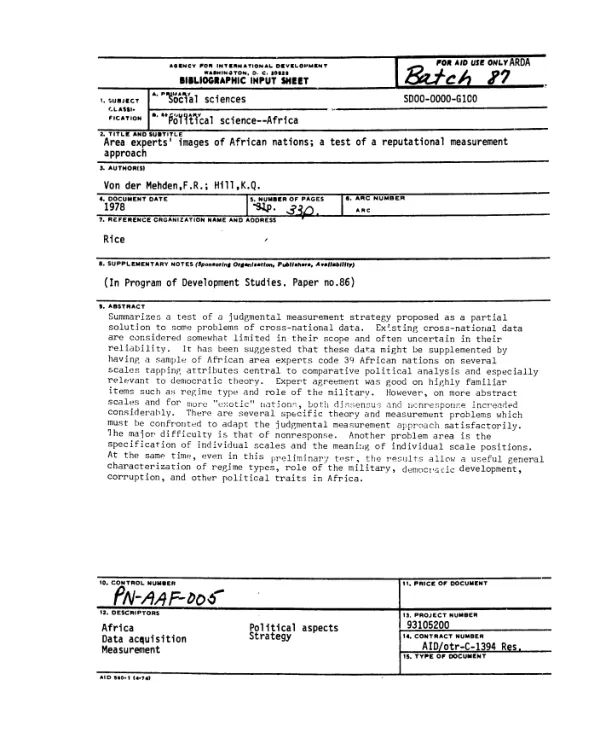
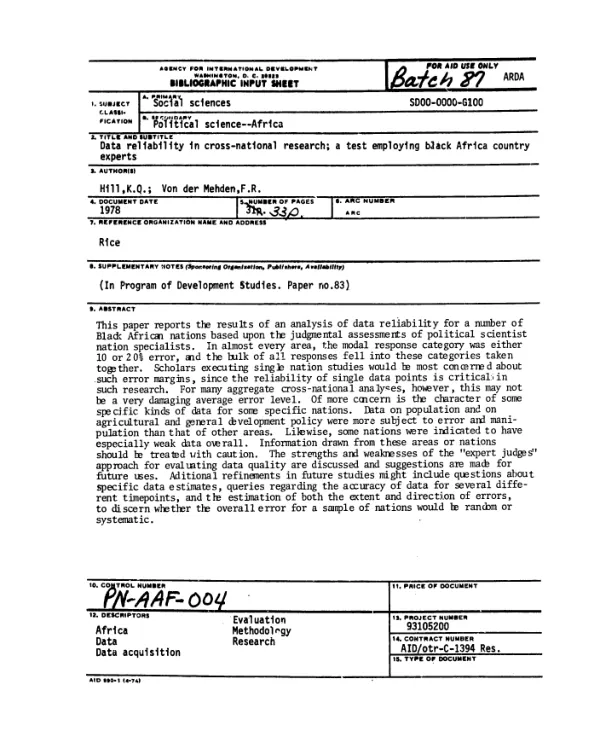
This paper reports the results of an analysis of data reliability for a number of Black African nations based upon the judgmental assessments of political scientist nation specialists.
Hill, K. Q.; Von der mehden, F. R. · 1970
Sign in to readA free account is required to download.
Abstract
In almost every area, the modal response category was either 10 or 20% error, and the bulk of all responses fell into these categories taken together. Scholars executing single nation studies would be most concerned about such error margins, since the realibility of single data points is critical in such research. For many aggregate cross-national analyses, however, this may not be a very damaging average error level. Of more concern is the character of some specific kinds of data for some specific nations. Data on population and on agricultural and general development policy were more subject to error and manipulation than that of other areas. Likewise, some nations were indicated to have especially weak data overall. Information drawn from these areas or nations should be treated with caution. The strengths and weaknesses of the "expert judges" approach for evaluating data quality are discussed and suggestions are made for future uses. Additional refinements in future studies might include questions about specific data estimates, queries regarding the accuracy of data for several different time points, and the estimation of both the extent and direction of errors, to discern whether the overall error for a sample of nations would be random or systematic.