USAID DEC
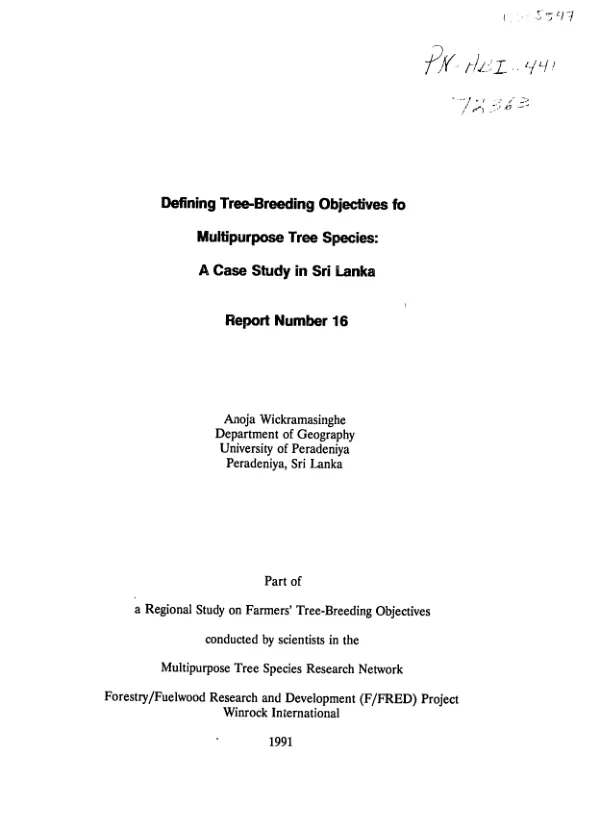
Defining tree - breeding objectives for multipurpose tree species : a case study in Sri Lanka
Sign inWINROCK INTERNATIONAL. INSTITUTE FOR AGRICULTURAL DEVELOPMENT
Defining tree - breeding objectives for multipurpose tree species : a case study in Sri Lanka
In Sri Lanka, the introduction of plantation crops and high- yielding, short-duration agricultural crops has led to the neglect of tree crops.
Wickramasinghe, Anoja · 1970
Sign in to readA free account is required to download.
Abstract
This study aims to facilitate genetic improvement of tree species by defining and describing tree characteristics desired by small-scale farmers on the basis of interviews conducted in two villages, Bambarabedda and Madugalla, located on opposite sides of the Ma-Oya River. Twenty-five households were surveyed. The report describes the distribution of trees and tree-based systems in the two villages and identifies the species grown, including the priority species and their products. It then identifies the sites where trees are planted (e.g., home gardens, field margins, or intercropped with annual crops). In the final two sections, the report uses the farmers" preferences to develop ideotypes, or "ideal trees," to provide a basis for genetic improvement of multipurpose tree species. Major conclusions include: (1) farmers give priority to food-producing trees; (2) in identifying ideal tree characteristics, it is important to consider the locations where farmers are able to plant tree species; (3) genetically improved varieties must be able to flourish under local environmental conditions; and (4) farmers see a need to reduce the space required for trees, both in terms of canopy width and rooting systems.
Connected topics