USAID DEC
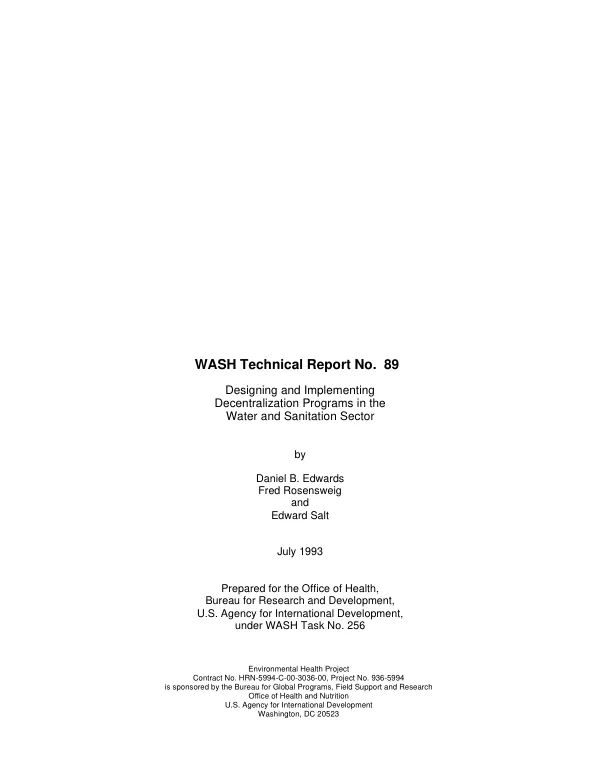
Designing and implementing decentralization programs in the water and sanitation sector
Sign inCAMP DRESSER AND MCKEE, INC. (CDM)
Designing and implementing decentralization programs in the water and sanitation sector
During the past several years, many developing countries have made major efforts to decentralize the delivery of public service.
Edwards, Dan; Salt, Edward +1 more · 1993
Sign in to readA free account is required to download.
Abstract
Factors driving these efforts include public pressure for improved services, the explosive growth of cities, a desire to push responsibility down to lower levels of government, economic reform, and democratization. The trend toward decentralization coincides with the growing use of the private sector as an alternative to government-provided services. This paper was written for project designers and implementers involved in the decentralization of water supply and sanitation services. The document does not provide guidance on whether or not to decentralize -- rather it focuses on the process of decentralization. The premise is that successful decentralization requires redefining the functions of the central government and strengthening local or provincial structures. The paper defines decentralization in the water and sanitation sector; determines the key sectoral and contextual issues to be assessed before designing a decentralization program; discusses the major elements necessary in a decentralization program; and provides guidance on the implementation of a decentralization program. The paper covers urban and rural water supply and sanitation, as well as peri-urban services. (Author abstract)
Related documents