USAID DEC
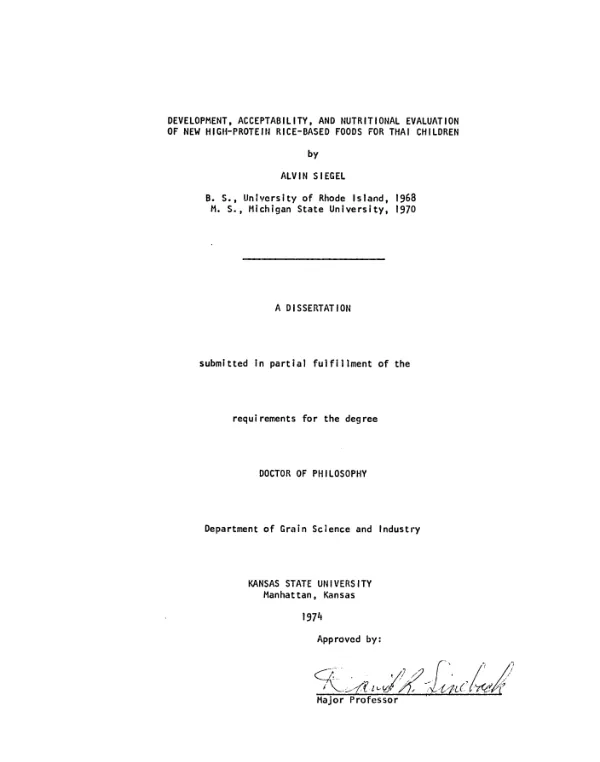
Development, acceptability, and nutritional evaluation of new high-protein rice-based food for Thai children
Sign inKANSAS STATE UNIVERSITY
Development, acceptability, and nutritional evaluation of new high-protein rice-based food for Thai children
Soy-supplemented rice noodles and rice-based snacks were developed for use in supplementary feeding programs at Child Nutrition Centers in Thailand.
Siegel, Alvin · 1970
Sign in to readA free account is required to download.
Abstract
Acceptability studies were conducted with pre-school and elementary school children in rural and urban localities. Nutritional evaluations of the products were determined using chemical and biological testing procedures. Dehydrated rice noodles, protein-supplemented with 20 and 30% full-fat soy flour, with and without methionine fortification at respective levels of 0.2 and 0.3%, were prepared in the same manner as traditional rice noodles. Acceptability studies were held with 197 pre-school children for five and three months at two rural Child Nutrition Centers and at a Bangkok nursery school, respectively. Each sample was given as the mid-day meal once a week on a rotating schedule. Regular rice and wheat noodles served as controls. Initial amounts of each dish served and additional portions requested were recorded. Proximate, vitamin, mineral, and amino acid analyses, in addition to rat growth studies, determined nutrient content and protein quality. Snacks were prepared containing additions of protein-supplements to a 70% rice base (dry basis) as follows: 30% soy, 25% soy plus 5% ground sesame, 25% soy plus 5% fish protein concentrate (FPC), and 30% soy protein concentrate.
Connected topics
Related documents