USAID. MISSION TO NICARAGUA
Development training
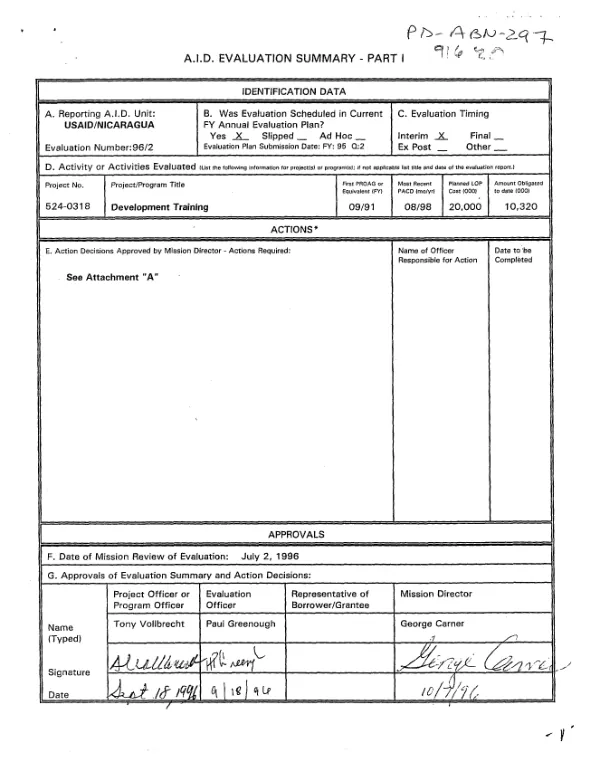
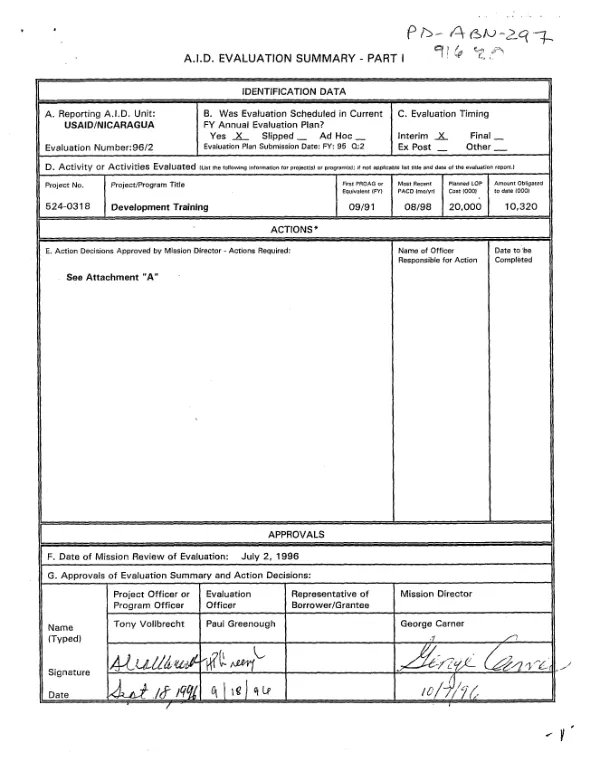
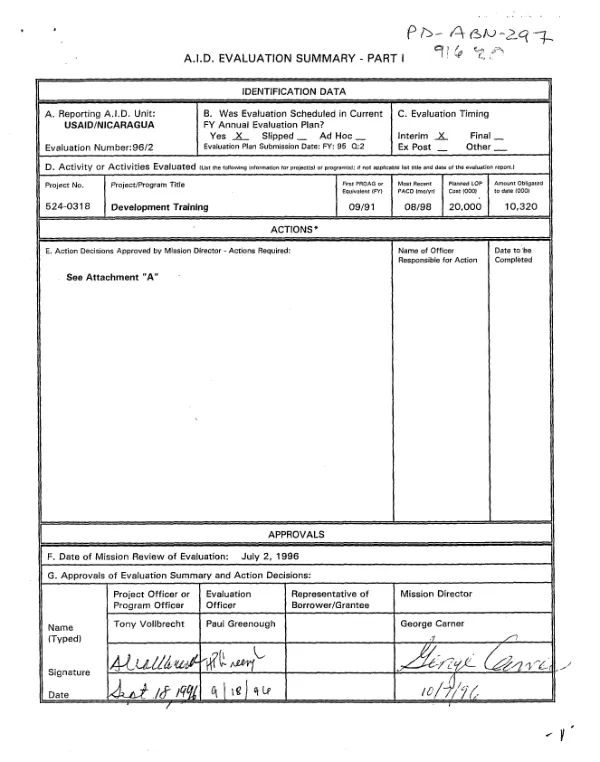
Summarizes attached evaluation of a project to provide management and technical training to Nicaraguans from the public and private sectors.
1996
Sign in to readA free account is required to download.
Abstract
Mid-term evaluation covered the period 9/91-11/95. The project is being managed in a very effective and commendable manner. The contractor has developed well-defined implementation procedures and guidelines. As of 8/31/95, 1,624 persons had been trained vs. a targeted 3,426; 295 were trained in the United States, 257 in a third country, and 1,329 in short-term programs in Nicaragua. By the end of 1995, 433 additional persons will have been trained, and by 6/96 another 563 will have been trained. Thus, it appears that the project can meet its targets if required funding levels are available in 1996 and 1997. The contractor has developed criteria to ensure that the recruitment and selection process is clear and transparent. The important elements in the training design are being addressed, although more rigorous efforts should be made to ensure that the follow-on component is included in all training activities. Trainees attributed much of their success to the fact that they had an opportunity to be active partners in the needs assessment and design stages of their training program. They and their supervisors perceive training as useful and relevant to the needs of their institutions and communities. The contractor expects to narrow the gap between: (1) planned and actual numerical goals for female participation; (2) the balance between short and long-term placements for the Caribbean and Latin American Scholarship Program (CLASP); and (3) actual and Agency-mandated percentages for placements from Historically Black Colleges and Universities (HBCUs). Greater linkage between training, project goals, and USAID"s higher level strategic objectives is needed. Also, there is a strong rationale for the project and other international agencies to collaborate in their institutional strengthening initiatives.