USAID
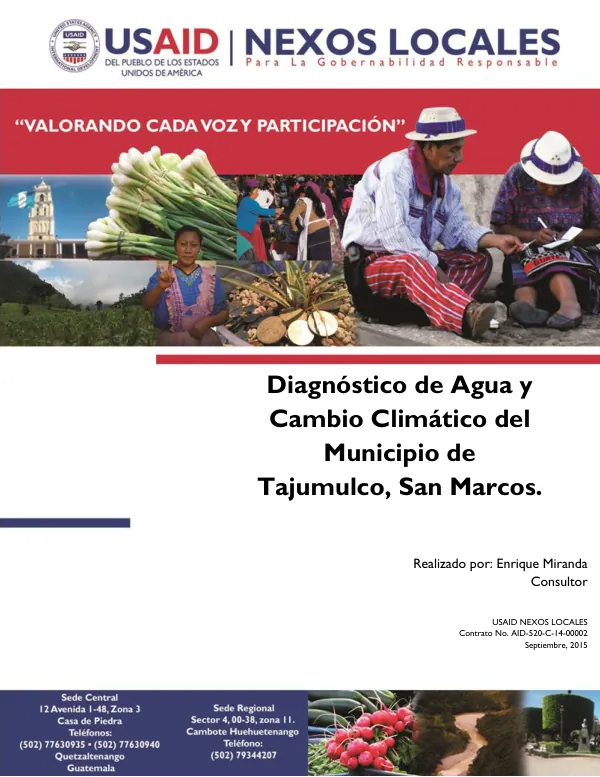
Diagnóstico de Agua y Cambio Climático del Municipio de Tajumulco, San Marcos
The municipality of Tajumulco, San Marcos, faces significant challenges in its water and sanitation systems.
2015 · 29 pages
Sign in to readA free account is required to download.
Abstract
The town's water supply is vulnerable to structural failures due to aging infrastructure and natural disasters such as landslides and floods. The system also suffers from a high level of contamination, with four out of every ten families experiencing waterborne illnesses. The town's water supply is sourced from the Cutzulchimá River, which is contaminated with wastewater from households and businesses. The town's residents have expressed concerns about the safety of their drinking water, with many rejecting the use of chlorine as a disinfectant. The town's water and sanitation infrastructure is in need of significant investment and upgrading to ensure the health and well-being of its residents. The municipality of Tajumulco has a number of actors involved in the management of its water and sanitation systems, including the municipal water and sanitation office, the department of water and sanitation, and the department of natural resources. These actors have implemented a number of initiatives to improve the town's water and sanitation systems, including the construction of new water treatment plants and the installation of new water distribution infrastructure. However, the town's water and sanitation systems are also vulnerable to the impacts of climate change, including changes in precipitation patterns and increased frequency of natural disasters. The town's residents have expressed concerns about the impacts of climate change on their water and sanitation systems, and have identified a number of needs for support and assistance in this area. The USAID-funded Nexos Locales project has provided support to the municipality of Tajumulco in its efforts to improve its water and sanitation systems. The project has worked with the town's residents and actors to identify the town's needs and priorities, and has provided technical assistance and training to help the town improve its water and sanitation infrastructure. The project has also worked with the town's residents to develop a number of initiatives to improve the town's water and sanitation systems, including the construction of new water treatment plants and the installation of new water distribution infrastructure. The project has also provided support to the town's residents in their efforts to adapt to the impacts of climate change, including the development of early warning systems for natural disasters and the installation of new water storage infrastructure. Overall, the municipality of Tajumulco faces significant challenges in its water and sanitation systems, including structural failures, contamination, and vulnerability to climate change. However, with the support of the USAID-funded Nexos Locales project, the town is making progress in improving its water and sanitation infrastructure and adapting to the impacts of climate change.
Related documents