ABT ASSOCIATES
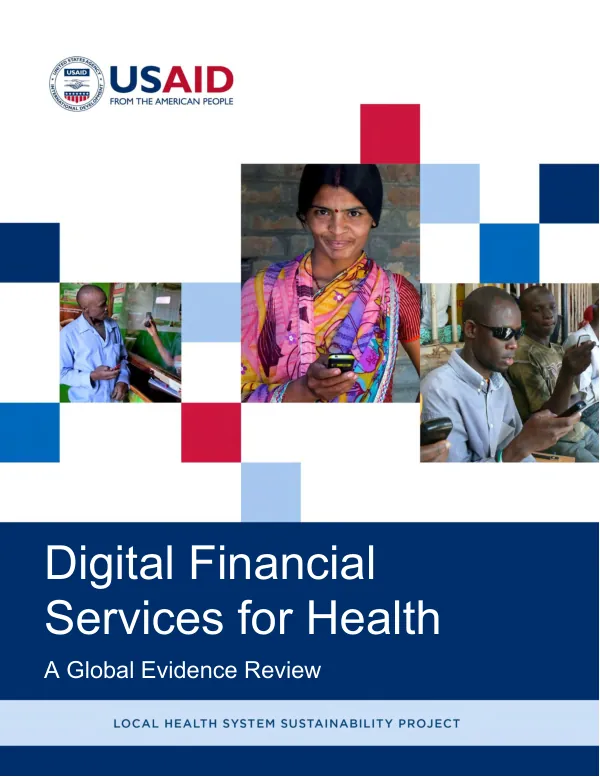
Digital Financial Services for Health: A Global Evidence Review
Digital financial services for health have emerged as a promising strategy to accelerate progress toward universal health coverage (UHC) in low- and middle-income countries.
2021 · 52 pages
Sign in to readA free account is required to download.
Abstract
The rapid proliferation of mobile telephones and advances in digital financial technology have expanded financial inclusion, particularly among the unbanked. This has created opportunities to improve access to and utilization of health services, ultimately leading to better health outcomes. The Local Health System Sustainability Project, led by Abt Associates, was commissioned by the U.S. Agency for International Development (USAID) to establish an evidence base on emerging models of digital financial services for health. The project aimed to identify evidence of the impact of such services on financial protection, health service access and utilization, and health system quality, efficiency, and performance. A systematic review of the peer-reviewed and gray literature was conducted, along with interviews with expert stakeholders who work at the intersection of financial services, digital technology, and health. The review identified 34 documents from 12 sources, and 36 key informants from 26 organizations were interviewed to enrich and qualify the evidence collected. The systematic review process involved a comprehensive search of databases, including PubMed, Google Scholar, and the World Health Organization's (WHO) database. The search strategy included keywords related to digital financial services, health, and low- and middle-income countries. The inclusion criteria for the review were documents that reported on the impact of digital financial services on health outcomes, financial protection, and health system performance. The characteristics of the included documents were analyzed, and the study designs and strength of evidence were evaluated. The review found that most of the included documents focused on mobile financial services, such as mobile money and mobile health insurance. The results of the review are presented in the following sections. Financial protection was a key area of focus in the review. The results showed that digital financial services can increase financial protection in low-resource settings by reducing out-of-pocket (OOP) payments and improving access to health insurance. For example, a study in Rwanda found that mobile health insurance increased financial protection for households, reducing OOP payments by 30%. Health service access and utilization were also examined in the review. The results showed that digital financial services can increase demand for and utilization of health services in low-resource settings. For example, a study in Kenya found that mobile health services increased health service utilization among rural communities, with a 25% increase in the number of patients seeking care. Health system performance was another key area of focus in the review. The results showed that digital financial services can impact health system performance in low-resource settings by improving operational efficiency and transparency. For example, a study in Uganda found that electronic medical records (EMRs) improved health system performance, reducing errors and improving patient outcomes. The review also identified underlying factors that contribute to the success or failure of digital financial services for health. The results showed that factors such as regulatory environments, infrastructure, and user adoption can influence the effectiveness of digital financial services. For example, a study in Tanzania found that regulatory environments can impact the adoption of mobile health services, with countries with more favorable regulatory environments experiencing higher adoption rates. Overall, the review found that digital financial services have the potential to improve access to and utilization of health services, ultimately leading to better health outcomes in low- and middle-income countries. However, the success of digital financial services depends on various factors, including regulatory environments, infrastructure, and user adoption.