USAID DEC
Duɔ̱ɔ̱p Ŋi̱i̱cä Nath: Läär: Cɛ gɔaa ɛn ɣöö cia ben kɛ mal
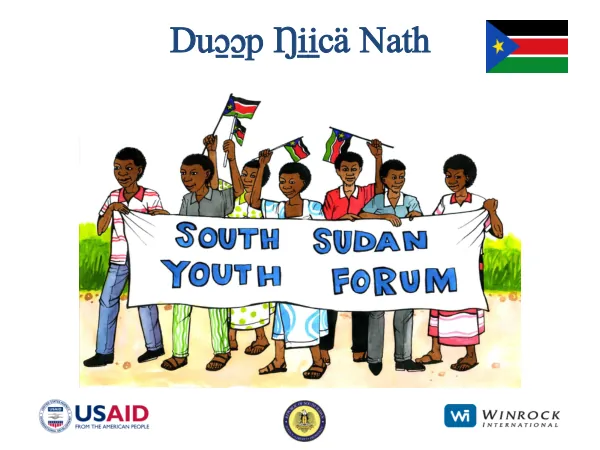
Duɔ̱ɔ̱p Ŋi̱i̱cä Nath is a governance framework that aims to establish a system of self-government in the region of Jinub Thuda̱n.
2012 · 78 pages
Sign in to readA free account is required to download.
Abstract
The framework is based on the principles of democracy and decentralization, with a focus on empowering local communities to manage their own affairs. The framework is structured around several key components, including the Transitional Constitution, which outlines the framework's guiding principles and institutions. The Transitional Constitution establishes a system of governance that is based on the principles of democracy, accountability, and transparency. The framework also establishes a system of local government, with the creation of the Water Management Committee (WMC) and the Boma/Payam administration. The WMC is responsible for managing water resources and ensuring their equitable distribution, while the Boma/Payam administration is responsible for providing basic services such as healthcare, education, and infrastructure. The framework also emphasizes the importance of community participation and engagement in the decision-making process. It establishes a system of community-based decision-making, where local communities are empowered to make decisions about their own affairs. The framework is guided by the principles of self-reliance and self-sufficiency, with a focus on empowering local communities to manage their own resources and make their own decisions. It also emphasizes the importance of accountability and transparency in governance, with a focus on ensuring that decision-making processes are open and inclusive. The framework is based on the principles of democracy and decentralization, with a focus on empowering local communities to manage their own affairs. It establishes a system of governance that is based on the principles of accountability, transparency, and participation, with a focus on ensuring that decision-making processes are open and inclusive. The framework is designed to be flexible and adaptable, with a focus on responding to the changing needs and circumstances of local communities. It establishes a system of governance that is based on the principles of self-reliance and self-sufficiency, with a focus on empowering local communities to manage their own resources and make their own decisions. The framework is based on the principles of self-reliance and self-sufficiency, with a focus on empowering local communities to manage their own resources and make their own decisions. It establishes a system of governance that is based on the principles of accountability, transparency, and participation, with a focus on ensuring that decision-making processes are open and inclusive. The framework is designed to be a transitional mechanism, with a focus on establishing a system of governance that is based on the principles of democracy and decentralization. It establishes a system of local government, with the creation of the Water Management Committee (WMC) and the Boma/Payam administration, and emphasizes the importance of community participation and engagement in the decision-making process.