USAID DEC
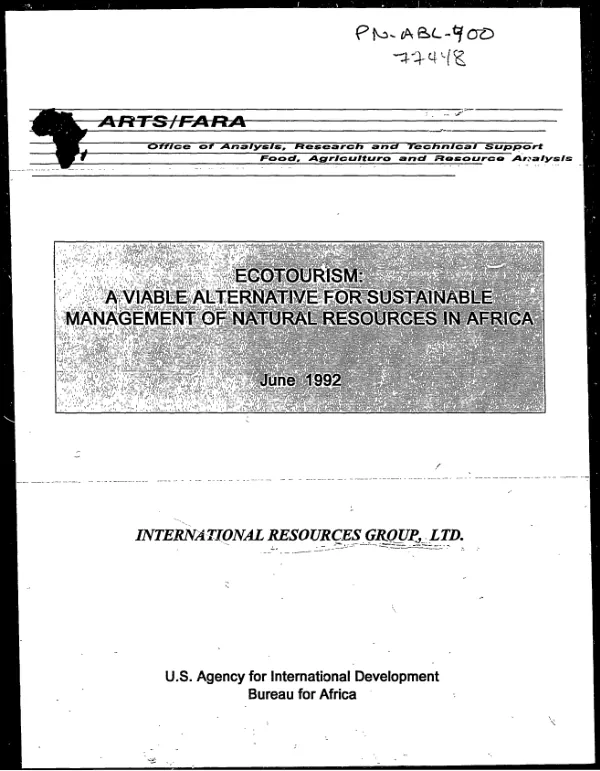
Ecotourism : a viable alternative for sustainable management of natural resources in Africa
Sign inINTERNATIONAL RESOURCES GROUP (IRG)
Ecotourism : a viable alternative for sustainable management of natural resources in Africa
Ecotourism means many things to many people.
1992
Sign in to readA free account is required to download.
Abstract
Some define it strictly as travel with a conservation purpose, while others see it as an economically and socially sound way to conserve biodiversity. Some have been eager to exploit the term as a marketing tool, while others see it as a vehicle of improvement for people living adjacent to biologically important areas. This report describes the history and current status of ecotourism and its role in economic development and natural resource management. It focuses on the role of private, commercial-sector organizations, as they are the least well-known and a crucial segment of ecotourism. Several specific examples of ecotourism, e.g., the Mountain Gorilla Project in Rwanda, are discussed briefly. Major findings include the following: (1) Sub-Saharan Africa has considerable untapped potential for ecotourism. (2) The benefits of ecotourism are only beginning to be quantified. (3) Although ecotourism could promote A.I.D."s goals in private sector development and natural resource management, no major projects are being funded. (4) Marketing is a key area where nature tourism needs support. (5) Private ground operators are necessary to deliver tours that are responsive to tourists" needs, but they are one of the weakest links in the industry due to under-capitalization. (6) Local communities should be given a larger role in planning nature tourism. (7) Development of ecotourism in Africa hinges on a number of government actions in the areas of policy, planning, industry coordination, resource management, infrastructure development, and finance. Includes bibliography and a listing of key organizations and key individual contacts.