USAID DEC
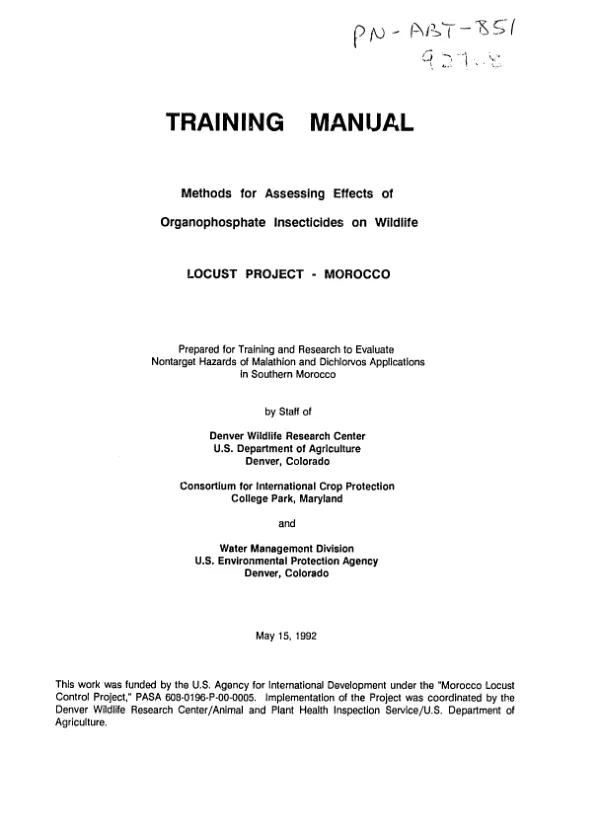
Ecotoxicological assessment of insecticides used for locust control in southern Morocco
Sign inU.S. DEPT. OF AGRICULTURE. ANIMAL AND PLANT HEALTH INSPECTION SERVICE. DENVER WILDLIFE RESEARCH CENTER
Ecotoxicological assessment of insecticides used for locust control in southern Morocco
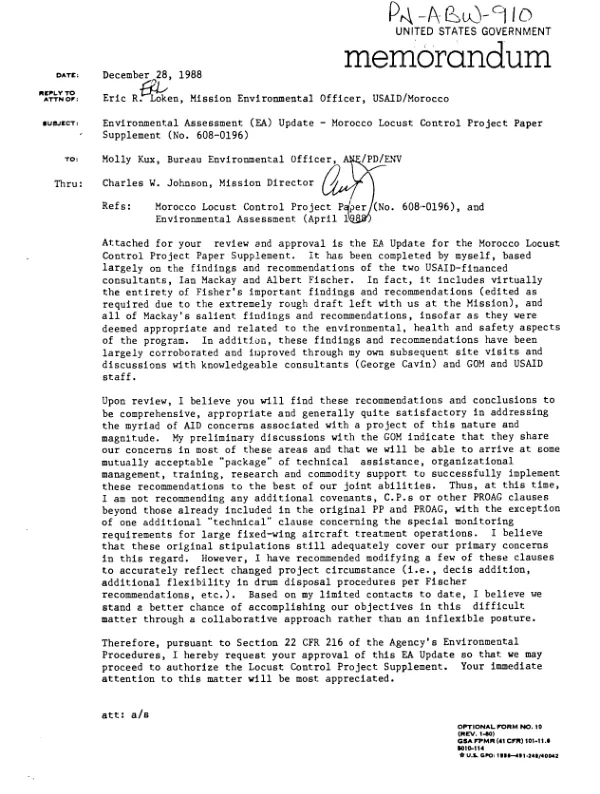
During the 1986-90 irruption of desert locusts in Africa, more than 4.5 million ha in Morocco were treated with insecticides.
Keith, James O.; Bruggers, Richard L. · 1995
Sign in to readA free account is required to download.
Abstract
In January and February 1992, U.S. and Moroccan scientists conducted studies on nine three-square-km experimental plots near Guelmim in southern Morocco to evaluate the effects of malathion and dichlorvos, two of the three principal insecticides used (the environmental effects of the third, fenitrothion, had already been studied in Senegal) on birds, mammals, and insects. Of the nine experimental plots, three were aerially sprayed with malathion, three with dichlorvos, and three were left untreated. However, some applications resulted in less than anticipated deposits of insecticides. Malathion residues on vegetation were low, and 85-90% of residues in soil were gone after 1 week. Only trace amounts of dichlorvos were recovered from either soil or plants. Among birds and mammals, inhibition of acetylcholinesterase was found only in brains of thekla larks on malathion-treated plots. No apparent mortality or significant effects on numbers or activity of birds and mammals were recorded. Malathion killed bees and reduced the abundance of ants, orthopterans, and apparently one species of beetle. Dichlorvos did not affect insects as severely, but it appeared to reduce the abundance of Tenebrionid beetles and the number of bees entering hives. The feeding habits of birds and mammals were not greatly affected. The percentage of animal matter eaten by red-rumped wheatears decreased on dichlorvos-treated plots, and ants largely disappeared from diets of birds on malathion-treated plots. (Author abstract, modified)
![Supplementary environmental assessment [SEA] for potential USAID assistance to locust/grasshopper control operations in Malawi](https://covers.devme.ai/gen/55643.webp)
![PRRO PERSUAP (pesticide evaluation report & safe [i.e. safer] use action plan)](https://covers.devme.ai/gen/35345.webp)