U.S. DEPT. OF THE INTERIOR
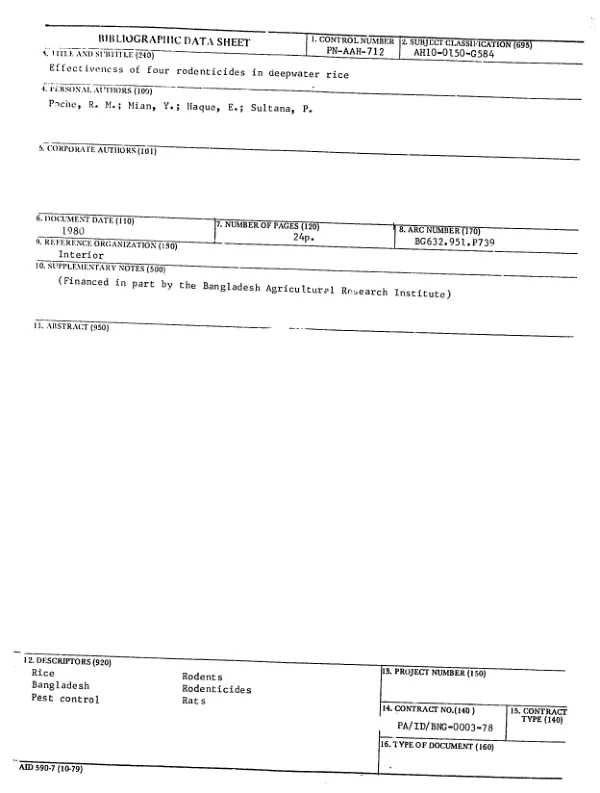
EFFECTIVENESS OF FOUR RODENTICIDES IN DEEPWATER RICE
Over one-half of Bangladesh is flooded each year, causing villages to become small, separated islands infested by rodents driven from the flooded fields.
POCHE, RICHARD M.; MIAN, YOUSUF · 1970
Sign in to readA free account is required to download.
Abstract
The rodents are a terrible problem for the production of deepwater rice, a major crop in Bangladesh"s delta regions, as they raid the crop for food and nest materials. This report was based on a study that identified the rodent species that damage deepwater rice and compared the efficacy of four rodenticides used for their control. The study was conducted in five villages typical of deepwater rice areas of Bangladesh. The major rodent problem species were the black rat (Rattus rattus), lesser bandicoot rat (Bandicota bengalensis), and bandicoot rat (Bandicota indica). The rodenticides used in the study include 1% benzenesulfonic hydrazide (DRC-4575), 0.005% difenacoum (DF), 2% zinc phosphide (ZP), and 0.005% brodifacoum (BR). The rodenticides were baited in wooden boxes that were monitored weekly, and an average of 10 boxes were placed on each island. Baits were placed in separate dwellings (to be moved every 3 days) and along the islands" peripheries. Bait was dispensed at stations in amounts of 100 gm (DRC-4575 and DF) and 200 gm (ZP and BR). Dyes were added to the rodenticides to verify the cause of death. Within 2 weeks, islands treated with DRC-4575 and DF experienced a rodent population decline to near zero; islands using ZP and BR realized a slower population decline, due to their larger size and the limited number of baits. DRC-4575 reduced rodent population by 90.1%; DF by 94.1%; BR by 90%; and ZP by 87%. DRC-4575 was noted for its quick effect, which may inspire greater local support for pest control efforts, and its high toxicity to rodents while not harming birds. DF"s further examination is recommended. BR is very effective against anticoagulant-resistant rats. Black rats shied from ZP, which has good potential but requires more research for good bait formulation before any large scale usage. ZP may be sufficient for field-oriented campaigns. However, the effective control of Bangladesh"s field and storage pests, while concurrently addressing public health problems, requires a broad spectrum rodenticide compound.