WINROCK INTERNATIONAL. INSTITUTE FOR AGRICULTURAL DEVELOPMENT
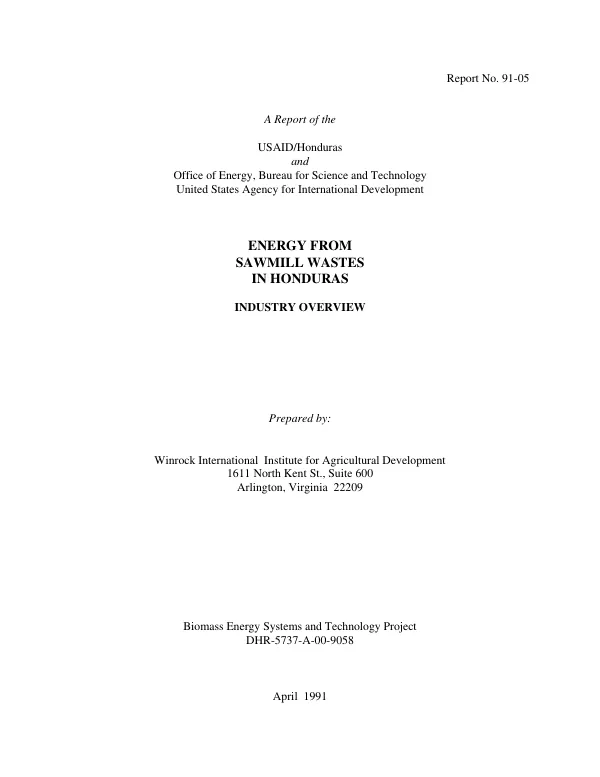
Energy from sawmill wastes in Honduras : industry overview
The Honduran woodproducts industry is a major sector of the national economy.
1970
Sign in to readA free account is required to download.
Abstract
Most sawmills in Honduras currently derive their energy requirements from imported petroleum products. At the same time, they generate and discard large quantities of energy-rich wood wastes. These wastes could supply all the sawmills" energy requirements, reduce the sawmills" burden on the environment (by eliminating current waste management practices), and provide surplus energy in the forms of electricity, process steam, or solid fuels for the national economy. Because nearly all wood wastes are produced in rural areas, waste-wood energy systems could also provide rural employment opportunities. This report assesses the technical and financial feasibility of wood energy cogeneration in Honduras. It claims that industry-wide use of efficient wood-energy systems could produce nearly 10 million kilowatt-hours of electricity per year for the sawmills. The amount of electricity available for off-site sales from sawmills would be 140-455 kilowatts per year, depending on the size of the sawmill. The report states that there are no significant constraints to the use of wood energy systems and investments in wood energy systems would meet or exceed investment criteria.
Connected topics