ROBERT R. NATHAN ASSOCIATES, INC.
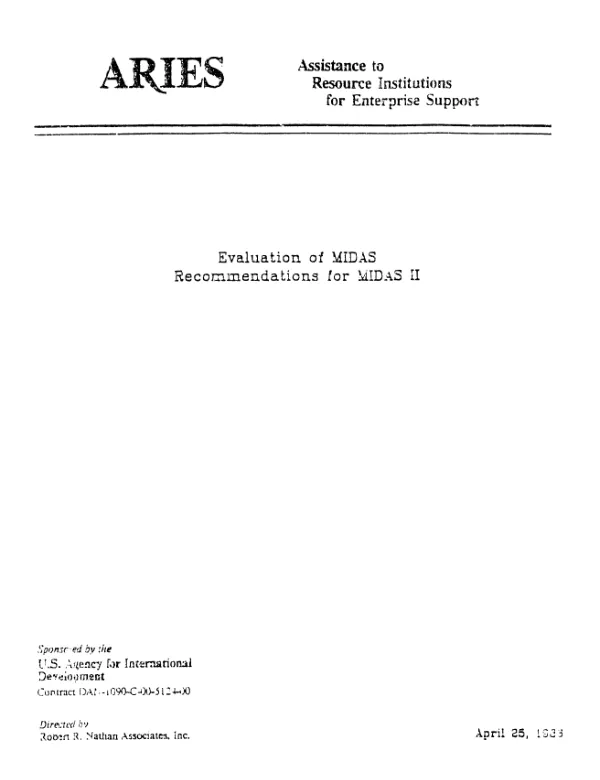
Evaluation of MIDAS : recommendations for MIDAS II
Evaluates project to encourage employment in the rural non-farm sector by providing analytical and financial services through a local NGO (the Micro Industry Development Assistance Society, or MIDAS) to small- and medium-sized enterprises in Bangladesh.
Howe, Gary|Pulver, George · 1986
Sign in to readA free account is required to download.
Abstract
External evaluation covers the period 9/81-3/86 and is based on document review and interviews with key project personnel. There has been a dramatic shift in emphasis in the MIDAS program from the original Project Paper to the revised Cooperative Agreement and amendments. As a result, MIDAS' target beneficiaries have changed from small and micro producers to medium-sized enterprises, and its emphasis has shifted from employment generation and small sector industrial development to commercially-oriented business development. This movement has compromised MIDAS' ability to reach women, since they tend to be the most "micro" of all producers. Nevertheless, MIDAS has been managed and administered in a responsible and competent manner, and has developed a reputation for fairness and honesty in dealing with client groups. Its cash position is strong, and its accounting system and financial management policies are adequate (as shown by the comparatively low number of bad loans); however, the length of time required to process loan applications (6 to 9 months), due partly to MIDAS' status as an NGO, has discouraged some potential borrowers. MIDAS has also been very responsive to USAID/B's wishes in structuring financial activities in support of small scale enterprise, although this has occasionally led MIDAS into attempting to meet conflicting demands. The salient issue here is that MIDAS cannot fulfill A.I.D.'s demand that it become a self-sustaining organization, and at the same time provide unprofitable support services to small-scale enterprises. Recommendations suggest ways to structure the cost accounting system so that the MIDAS could become commercially viable while providing these services on a full cost recovery basis through work order contracts. Donors then would be able to target subsidies directly to desired support activities, instead of subsidizing the organization that provides the services. It can be expected that this move will lead to more efficient allocation of resources within MIDAS and from donor organizations. (Author abstract, modified)